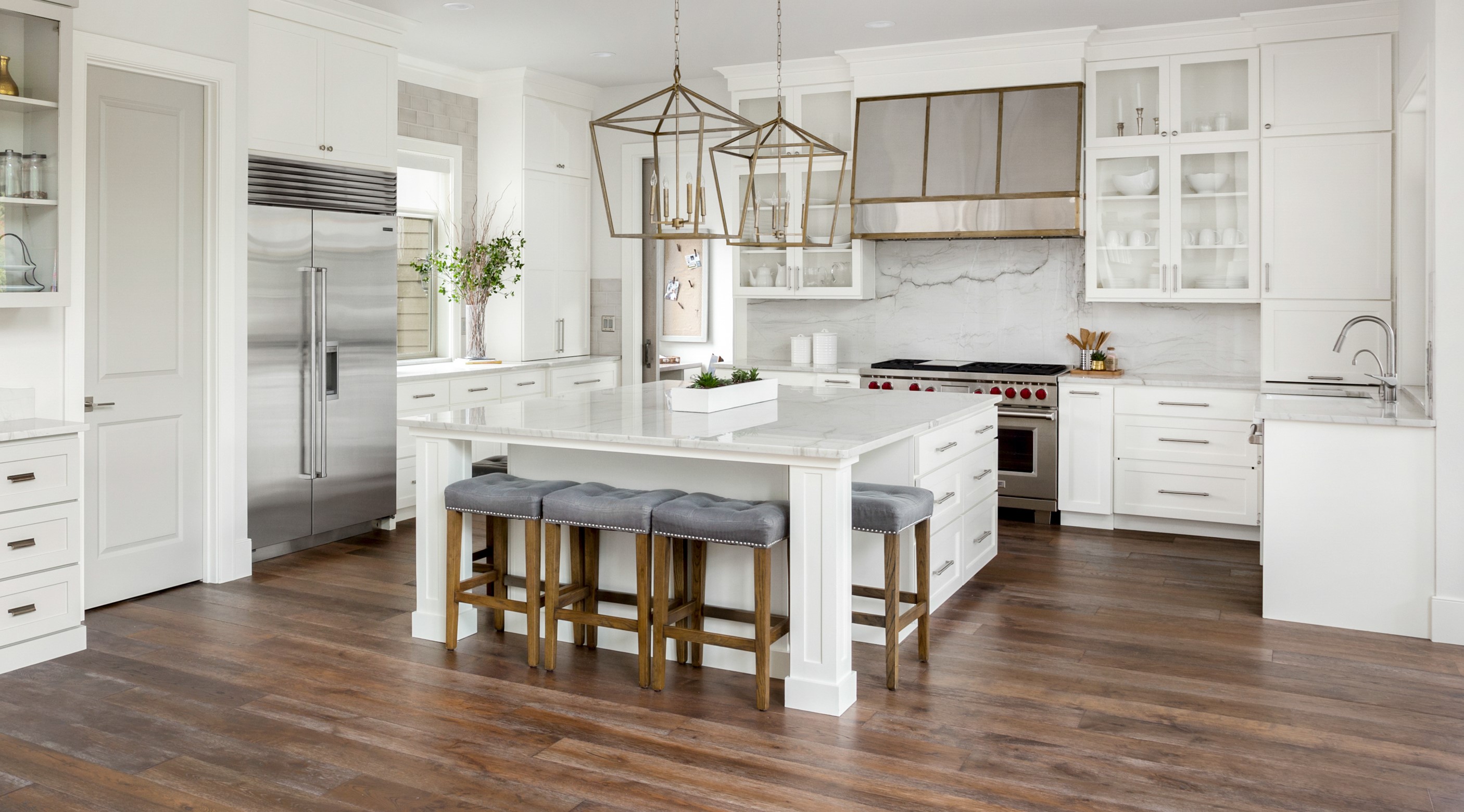
When it comes to kitchen design, one term you might hear thrown around is the “work triangle.” This concept is a classic principle in kitchen layout planning, designed to make cooking and cleaning up as efficient and easy as possible. If you’re new to the idea of kitchen design, don’t worry—I’m here to explain it in a way that’s easy to understand, and by the end, you’ll see why the work triangle has been a cornerstone of good kitchen design for decades.
What Is the Work Triangle?

Imagine a triangle connecting the three main areas of your kitchen: the stove (or cook top), the sink, and the refrigerator. These are the spots where most of the action happens when you’re preparing a meal. The work triangle refers to the layout formed when you draw an imaginary line from each of these areas to the next, creating a triangle shape.
In a well-designed kitchen, these three points should be close enough to each other to make your cooking tasks flow smoothly, but not so close that the space feels cramped. The idea is to minimize the amount of walking you do while preparing meals, which makes cooking more efficient and less tiring.
Why Is It Used?
The work triangle is used because it’s all about efficiency and convenience. Think about it—when you’re cooking, you’re often moving between the refrigerator (to grab ingredients), the stove (to cook them), and the sink (to wash or prep food). If these three key areas are too far apart, you end up doing a lot of unnecessary walking back and forth, which can make meal prep a bit of a chore. On the other hand, if they’re too close together, the kitchen might feel cramped, or multiple people using the space could get in each other’s way.
The work triangle helps ensure that your kitchen is not only functional but also comfortable to work in, whether you’re whipping up a quick weeknight dinner or preparing a big holiday feast.
The Benefits of the Work Triangle
- Efficiency: By keeping the most-used areas of the kitchen within easy reach, the work triangle reduces the amount of time and effort you spend moving around the kitchen. This can make cooking quicker and less tiring.
- Comfort: A well-designed work triangle can make your kitchen feel more spacious and organized. It creates a natural flow, making the kitchen a pleasant place to spend time in.
- Safety: With the work triangle, there’s less chance of accidents because you’re not constantly walking long distances carrying hot pots or sharp knives.
- Flexibility: While the traditional work triangle is designed for one cook, modern interpretations can adapt to multi-cook households by creating multiple zones, so everyone has their own space to work.
Where Did It Originate?
The work triangle concept dates back to the 1940s, during the post-World War II era, when there was a push to create more efficient and functional home environments. It was developed by industrial psychologists at the University of Illinois School of Architecture, who studied how people moved and worked in kitchens. The goal was to make the kitchen more efficient, especially as homes were being built smaller and more compact during that time.
This concept quickly became a standard in kitchen design and has been used ever since, with only slight adaptations to accommodate modern appliances and larger, more open kitchen layouts.
Why Did It Originate?
The work triangle originated out of a need for practicality. In the 1940s, many homes had small, utilitarian kitchens, and the goal was to maximize efficiency in these limited spaces. With more women entering the workforce after World War II, there was a growing need for homes—and particularly kitchens—that could help make everyday tasks quicker and easier. The work triangle was a solution to this need, offering a layout that minimized unnecessary movement and made meal preparation more streamlined.
Is the Work Triangle Still Relevant Today?
Absolutely! While kitchens today are often larger and more open than the compact kitchens of the 1940s, the work triangle remains a valuable guideline for creating an efficient layout. Modern kitchens might have islands, additional prep areas, or more appliances, but the basic principle of keeping the key areas—stove, sink, and refrigerator—within easy reach still applies.
In fact, in today’s kitchens, designers often create multiple work triangles or zones to accommodate more than one person cooking at the same time. This adaptation of the original concept shows just how versatile and enduring the work triangle is.
In Conclusion
The work triangle is more than just a design trend—it’s a tried-and-true principle that has helped shape the way kitchens are designed for decades. By understanding the work triangle, you can appreciate why your kitchen is laid out the way it is and even use this knowledge to make improvements or guide future renovations.
Remember, the key to a great kitchen is not just about having the latest gadgets or the most counter space; it’s about creating a space where everything flows smoothly, making cooking and cleaning up a joy rather than a chore. The work triangle is the foundation of that flow, ensuring your kitchen is as functional as it is beautiful.


Leave a Reply