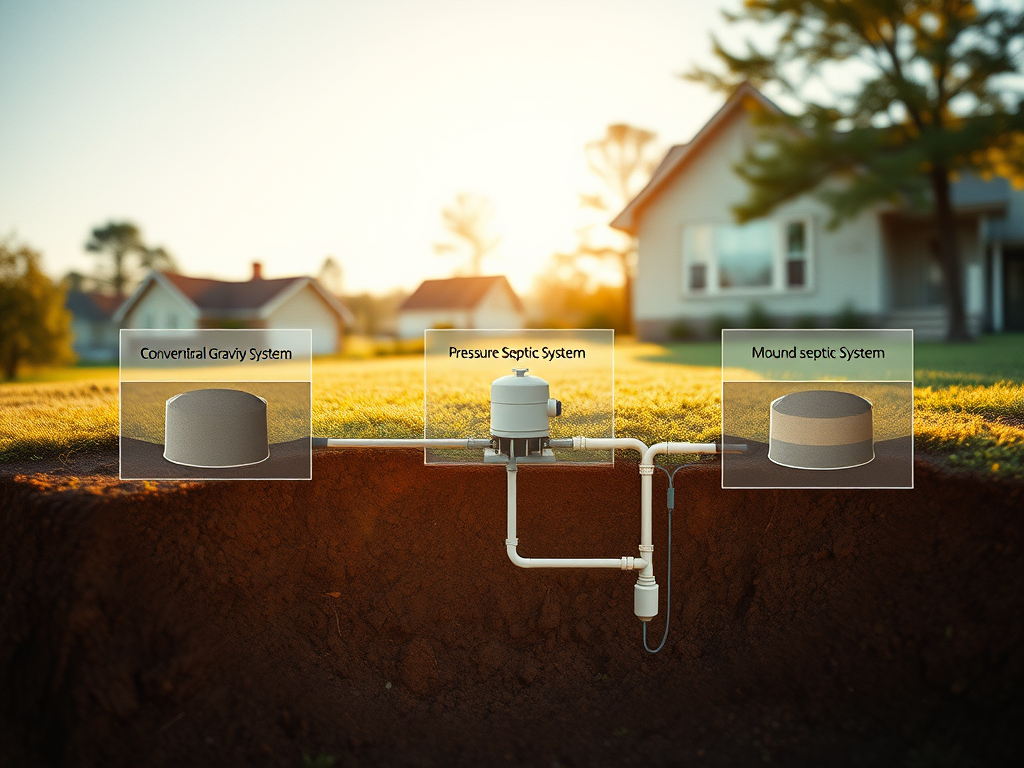
When building a home on land that isn’t connected to a public sewer, you’ll likely need a septic system to handle wastewater. Septic systems are essentially on-site wastewater treatment structures that treat and dispose of household water from kitchens, bathrooms, and laundry rooms.
You have probably searched for property for a long time. Hopefully, you have read our Land Acquisition article and downloaded the checklist to help you find the right piece of property. (You can click here to jump to that article.)
Choosing the right type depends on factors like soil type, water table levels, property size, and budget. This can generally be found when getting a Perc test, which you can read more about by clicking here.
Here, we’ll explore the top five types of septic systems, why they might be suitable for different situations, their pros, and their cons, so you can make an informed decision.
1. Conventional Gravity Septic System
How it Works:
A conventional gravity septic system is the most basic type and works well in areas with suitable soil drainage. In this system, waste flows from the home into a septic tank, where solids settle to the bottom and liquids flow to a drain field, dispersing through gravel-filled trenches where bacteria help treat the waste.
Best For:
This system is ideal if your land has well-draining soil and a low water table, meaning groundwater is not close to the surface. It’s best suited for larger plots with more space for the drain field.
Pros:
- Simple Design: Fewer moving parts mean less that can go wrong.
- Low Maintenance: These systems are straightforward to maintain, needing occasional pumping every few years.
- Cost-Effective: Conventional systems are often the most affordable to install.
Cons:
- Requires Good Soil: Poorly draining soil or clay-heavy soil can prevent the system from working properly.
- Larger Land Requirement: Needs a significant area for the drain field, making it unsuitable for small properties.
- Limited on Rocky or Sloped Land: Not ideal for rocky terrains or sloped land, as gravity can cause issues.
2. Pressure Distribution Septic System
How it Works:
This system works similarly to the conventional system but adds a pump to evenly distribute wastewater across the drain field. The pump ensures that water is released more evenly, preventing over-saturation in one area.
Best For:
Pressure distribution systems are great for lands with moderate soil drainage and sloped terrain, where even distribution helps avoid pooling or surface runoff.
Pros:
- Suitable for Slopes: Works well on sloped terrain where gravity flow would be uneven.
- Better Drain Field Health: Even distribution extends the life of the drain field.
- Increased Flexibility: Can work in areas with somewhat restrictive soil conditions.
Cons:
- Higher Cost: Additional components like pumps make it more expensive than gravity systems.
- Increased Maintenance: The pump requires regular servicing to avoid breakdowns.
- Requires Electricity: If there’s a power outage, the system may not function without a backup generator.
3. Mound Septic System
How it Works:
In a mound system, a layer of sand is added on top of the soil, and wastewater is pumped into this mound where it slowly filters through the sand and soil below. This system is often used when there’s a high water table or shallow soil depth.
Best For:
Mound systems are suitable for properties with high groundwater levels, shallow soil layers, or clay-heavy soils where traditional systems would struggle.
Pros:
- Works with Shallow Soil: Ideal for land with a high water table or thin soil layer.
- Elevated Drain Field: Keeps wastewater away from groundwater, protecting water quality.
- Good for Poorly Drained Soil: The sand layer helps filter the waste effectively.
Cons:
- High Initial Cost: Mound systems can be costly to install because of the added materials and labor.
- Requires More Land: The mound requires a larger area, which can limit yard use.
- Visible Mound Structure: The raised mound can be visually intrusive for some homeowners.
4. Aerobic Treatment Unit (ATU)
How it Works:
An ATU is like a mini-wastewater treatment plant for your home. It uses oxygen to treat wastewater more thoroughly before releasing it to the drain field. The system involves an aeration chamber that adds air to the water, encouraging bacteria to break down waste faster.
Best For:
ATU’s work well on smaller properties, poorly drained soil, or environmentally sensitive areas where higher wastewater treatment levels are needed.
Pros:
- Thorough Treatment: Reduces harmful bacteria and pollutants more effectively than other systems.
- Compact Design: Works well on smaller properties with limited space for a drain field.
- Environmental Benefits: Produces cleaner effluent, reducing the risk of pollution.
Cons:
- High Cost: Initial costs and ongoing maintenance fees are generally higher.
- Requires Regular Maintenance: Needs frequent inspections and maintenance to stay effective.
- Power Dependency: The system needs electricity to run the aeration pump, making it vulnerable during power outages.
5. Drip Distribution Septic System
How it Works:
This advanced system uses a network of small pipes to slowly drip wastewater into the soil in the drain field. It doesn’t need a large trench like other systems, allowing for more flexibility in land usage.
Best For:
Drip distribution systems are well-suited for properties with shallow soil or uneven terrain and can handle difficult soil conditions better than conventional systems.
Pros:
- Flexible Installation: Can be installed on uneven terrain and doesn’t require deep trenches.
- Efficient Soil Usage: Smaller drain field requirements make it ideal for small properties.
- Effective in Low-Drainage Soils: Works well in soils that don’t drain well, such as clay.
Cons:
- Costly Installation and Maintenance: More expensive to install and maintain, as it requires specialized equipment.
- Complex Design: The system has multiple components, increasing the risk of needing repairs.
- Requires Regular Monitoring: Needs frequent inspections to ensure all parts are working correctly.
Final Thoughts
Choosing the right septic system is a crucial step in designing your dream home on a property that requires on-site wastewater treatment. Each system has its strengths, and selecting the best one depends on your unique land characteristics and budget. For personalized guidance on designing your perfect home—septic system and all—trust the expertise of Dennis Fletcher Design Studio. Our team understands the intricacies of custom home design, from foundation to finishing touches, and will ensure every detail is tailored to fit your vision. Contact Dennis Fletcher Design Studio today to start building the custom home you’ve always dreamed of!
Scroll down to set up a free consultation call.
If you’re excited about these ideas and want to explore how they can fit into your future home, subscribe to our page for more insights on the latest in home design.


Leave a Reply