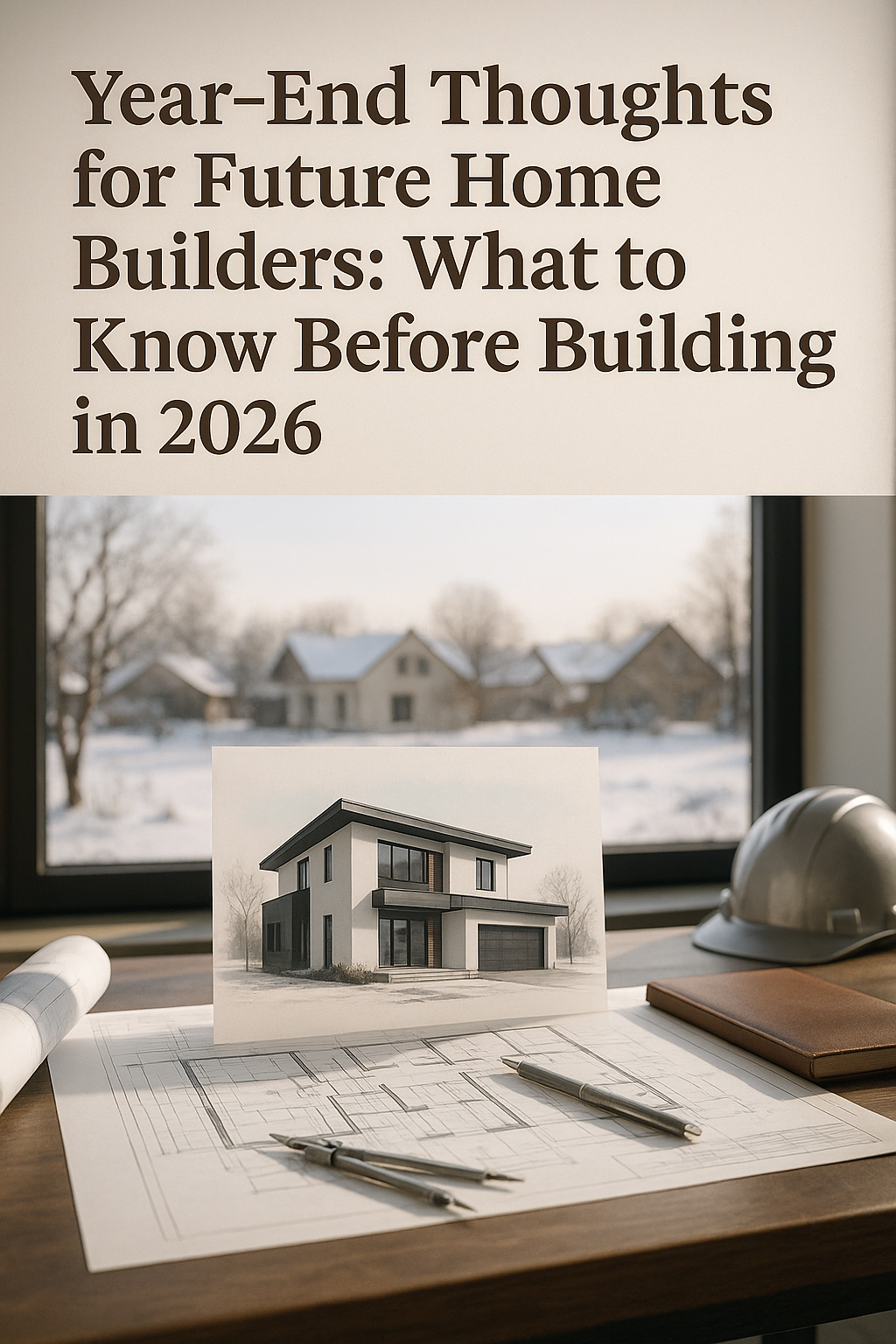
Building a new home in 2026 is equal parts exciting milestone and strategic planning exercise. The construction world continues to evolve—materials, costs, design trends, regulatory requirements, and technology are shifting rapidly. Whether you already own your land or are still searching, this guide will help you enter the new year with clear expectations, smart strategies, and fewer surprises.
As always, this article is written for homeowners who may be unfamiliar with construction or real estate lingo—but who want to feel confident, prepared, and in control. Let’s dive in.
Where to Start in 2026
1. Begin With Your Land (Even If You Don’t Own It Yet)
Before you think about floor plans or finishes, your land determines what you can and can’t build. In 2026, counties and municipalities are still tightening requirements for environmental impact, stormwater management, and energy efficiency. That means early due diligence matters more than ever.
Check These First:
- Zoning: Dictates the size, type, and placement of your home.
Why it matters: If your land is zoned for agricultural use, for example, a large two-story home may need special approvals. Some rural areas also restrict how close you can build to property lines, water features, or neighboring barns. - Setbacks: These invisible “no-build zones” can drastically change your layout options.
Mistake to avoid: Buying land with a narrow buildable envelope—your dream layout won’t fit. - Utilities: Confirm well yield, septic suitability, and availability of electrical service.
Hidden headache: Drilling an unexpected deep well or upgrading a transformer can add thousands. - Topography: Steep lots = higher foundation costs. Flat lots = easier builds but may require more stormwater controls.
Bottom line: Start with a site plan, soil evaluation, and zoning review. A good designer—like Dennis Fletcher Design Studio—can help you understand limitations before you spend a dime on construction drawings.
2. Set Your Budget for Today’s Market, Not Last Year’s
Inflation cooled in 2025, but construction pricing rarely goes backward. In 2026:
- Lumber has stabilized but remains above pre-2020 levels.
- Electrical components and HVAC equipment continue to experience longer lead times.
- Trades pricing is rising due to ongoing labor shortages.
- Energy-efficiency standards are becoming stricter, increasing upfront costs.
What not to do:
❌ Don’t use 2020–2022 price expectations.
❌ Don’t assume the lowest bid is accurate.
❌ Don’t skip detailed construction documents.
Vague plans lead to surprise change orders—and blown budgets.
What to do instead:
✔ Build a cushion of 10–15% for contingencies.
✔ Get apples-to-apples bids based on detailed drawings and specifications.
✔ Plan your financing early—interest rates may shift again mid-2026.
3. Permitting in 2026: Expect More Detail, More Time
Local governments are requiring:
- More complete stormwater plans
- Stricter energy-code compliance
- Detailed grading plans
- Envelope and insulation verification
- Elevation certificates in flood-prone areas
- Enhanced mechanical ventilation modeling
Some jurisdictions now reject incomplete applications immediately, instead of allowing revisions mid-review.
Mistake to avoid:
❌ Submitting plans before engineering, septic design, or site layout is complete.
This causes delays and additional fees.
Pro tip:
Start the permitting conversation before design is finalized. Every county is different, and reviewing timelines can range from 30 days to 6 months depending on complexity.
4. Design Trends for 2026: What’s In and What’s Out
Trending In for 2026
1. Flex Rooms with Purpose
Instead of generic “bonus rooms,” homeowners are embracing:
- Hobby spaces
- Home gyms
- Dual-office setups
- Prep pantries
- Meditation rooms
These add long-term value and adaptability.
2. Warm Minimalism
Think clean lines with layered materials:
- Natural wood tones
- Textured wall treatments
- Subtle stone veining
- Calming, neutral palettes
This style ages gracefully and avoids the “sterile modern” look going out of favor.
3. Energy-Forward Mechanical Systems
Builders are pushing:
- Heat pumps
- ERVs/HRVs
- Higher-performance insulation
- Triple-pane windows in colder climates
Higher upfront cost, but lower monthly bills (and quieter homes).
4. Smart Home Infrastructure (Not Gadgets)
Hardwired:
- Access points
- Security
- Low-voltage lighting
- EV charger rough-ins
Future-proofs your home without forcing you into specific tech brands.
Trends Falling Out in 2026
1. Oversized Homes with Unused Rooms
People want efficient luxury, not dead space. Oversized two-story foyers are becoming optional rather than standard.
2. All-White Interiors
They’re harder to maintain, feel dated, and don’t reflect current design warmth.
3. Barn Doors Everywhere
They’re noisy, offer poor privacy, and leak sound—making them less ideal for offices and bedrooms.
4. Over-Specialized Rooms
Large home theaters, wine cellars, and billiard rooms are still wonderful—but only when truly used.
If it’s a novelty rather than a lifestyle, skip it.
5. What Not to Do When Planning Your 2026 Build
❌ Do not start without a site plan.
You’ll make wrong assumptions about driveway placement, grading costs, and septic location.
❌ Do not design the house before verifying setbacks and zoning.
Your perfect design may need major revisions—or worse, can’t be built at all.
❌ Do not skip a geotechnical review.
Poor soil = expensive surprises
Soft clay soils, high water tables, or organic fill can add tens of thousands to foundation costs.
❌ Do not underestimate the design process.
Good design is the cheapest way to save money during construction.
❌ Do not rely on “handshake agreements.”
Contracts protect relationships. Always use written scopes and payment schedules.
❌ Do not rush your builder selection.
Verify:
- References
- Timeline
- Recent builds
- License status
- Insurance
- Change order policies
This prevents time-consuming and expensive mistakes.
6. Year-End Suggestions to Set You Up for Success
✔ Interview designers and architects now for 2026 start dates.
Q1 and Q2 fill quickly.
✔ Walk your land in winter.
You’ll see drainage patterns, ground saturation, and access issues more clearly.
✔ Create a “must-have” and “nice-to-have” list.
Keeps your project focused when decisions become overwhelming.
✔ Build a realistic timeline.
From concept to permit to construction, plan on 12–18 months total depending on location and complexity.
✔ Gather inspiration—but don’t design via Pinterest.
Inspiration is good; forcing unrelated styles into one house is not.
✔ Work with professionals early.
Custom home design is a team sport.
Conclusion: Your 2026 Home Begins With Today’s Decisions
Building a home should be exciting—not confusing, stressful, or filled with surprise expenses. With the right preparation, clear expectations, and strong professional guidance, you can enter 2026 fully ready to create the home you’ve envisioned.
Ready to Start Planning the Right Way?
Building a new home is a major investment, and the best outcomes come from clear planning early—before decisions become expensive to change.
If you’re considering building in 2026 and want guidance tailored to your land, your goals, and your budget, I invite you to take the next step.
Schedule a Free 30-Minute Phone Consultation
This no-pressure conversation is an opportunity to:
- Ask questions about your land or a property you’re considering
- Understand zoning, permitting, and design considerations specific to your situation
- Learn when professional design makes the most sense for your project
- Get honest, experienced feedback before committing to plans or builders
Prefer to Start by Email?
You’re welcome to reach out directly with questions or project details at:
📧 info@dennisfletcherdesignstudio.com
Whether you’re just beginning to explore ideas or preparing to move forward, thoughtful planning now can save time, money, and frustration later. I’d be glad to help you navigate the process with clarity and confidence.
Leave a Reply