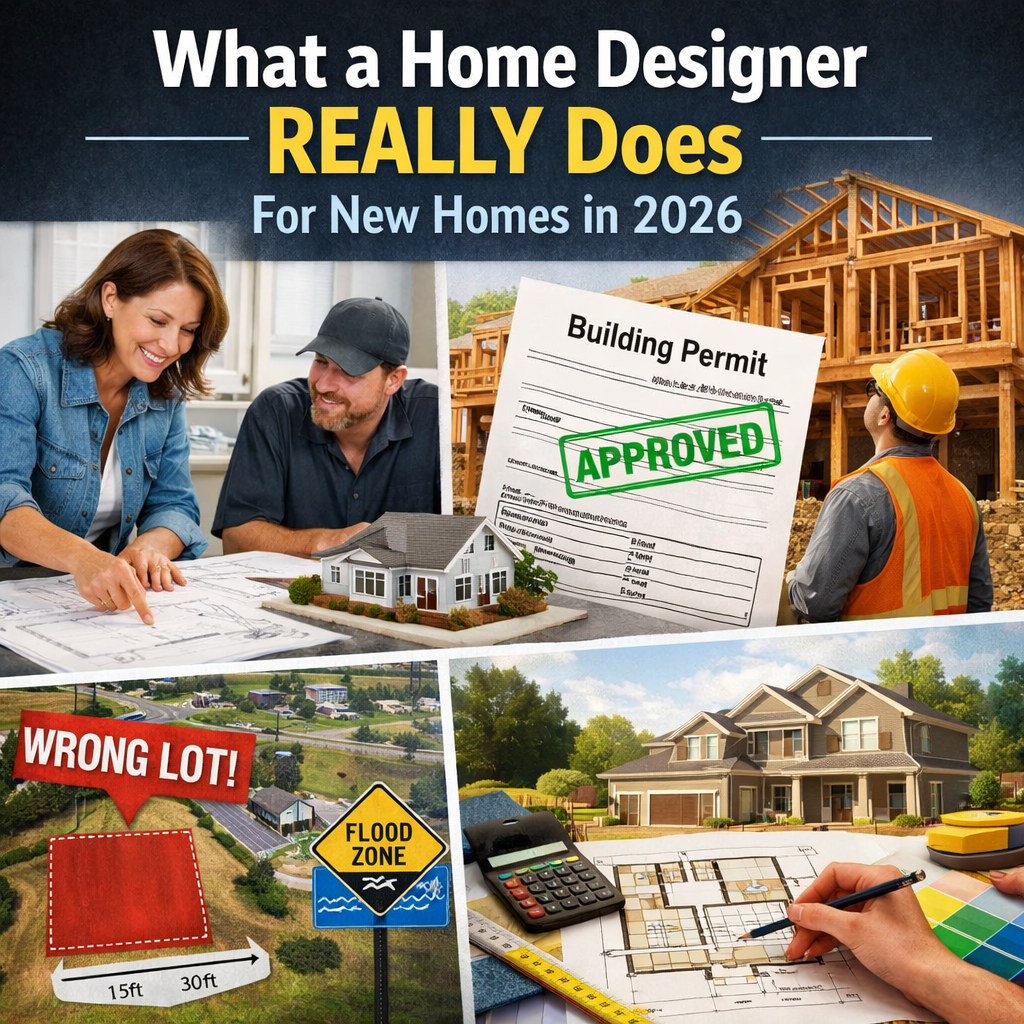
Why It Matters More Than Ever in 2026
If you’re thinking about building a new home in 2026, you’ve probably already realized something important: there are a lot of moving parts. Land selection, zoning rules, budgets, contractors, permits, floor plans, and a seemingly endless list of decisions that all affect how your home will look, function, and cost.
Some homeowners assume they can skip professional design, or rely solely on a builder or stock plan, to save money. Others aren’t sure what a residential designer actually does, or how they differ from architects and builders.
This article clears that up.
We’ll walk through:
- What a home designer really does
- How designers differ from architects and builders
- Why professional design often saves money, not costs more
- What not to do when planning a new home
- How zoning, permitting, and land constraints can derail a project
- Why 2026 makes professional design more important than ever
What Is a Residential Home Designer?
A residential home designer is a professional who specializes in planning, designing, and documenting homes for real people, real budgets, and real properties.
Unlike generic stock plans or builder-drawn layouts, a home designer creates a home that is:
- Designed specifically for your land
- Aligned with local zoning and permitting rules
- Tailored to how you actually live
- Thought through before construction begins
A good home designer doesn’t just draw rooms. They think through:
- Traffic flow
- Structural logic
- Cost efficiency
- Long-term livability
- Code compliance
- Construction sequencing
In short: they solve problems on paper before they become expensive mistakes in the field.
Home Designer vs. Architect vs. Builder
This is one of the most common points of confusion for homeowners.
Residential Designer
- Specializes almost exclusively in homes
- Focuses on practical design, constructability, and cost awareness
- Often works closely with builders and engineers
- Ideal for custom homes, additions, and remodels
- Deep understanding of zoning, setbacks, and residential codes
Architect
- Trained to design many types of buildings (commercial, institutional, residential)
- Often focuses on complex or high-profile projects
- Typically more expensive for standard residential work
- Excellent choice for highly complex or urban projects
- May be overkill for many single-family homes
Builder
- Responsible for construction, not design
- May offer basic design services, but their primary role is execution
- Often works from plans provided by a designer or architect
- Builders think in terms of schedules, materials, and labor—not long-term design strategy
👉 Important reality: Builders build what’s drawn. If the design has flaws, the house still gets built—with those flaws.
Why Professional Design Protects Homeowners
1. Prevents Costly Mistakes
One poorly thought-out decision can ripple through the entire project:
- Misplaced structural walls
- Inefficient roof lines
- Awkward room proportions
- Mechanical systems fighting the layout
- Oversized homes that blow the budget
Designers identify these issues before construction, when changes cost almost nothing.
2. Navigates Zoning and Land Constraints
Every property has rules:
- Minimum setbacks
- Maximum building height
- Lot coverage limits
- Environmental buffers
- HOA restrictions
- Septic and well placement requirements
A designer evaluates these before design begins. Without this step, homeowners often fall in love with a plan that:
- Won’t fit on the lot
- Violates zoning
- Requires expensive variances
- Delays permitting by months
3. Designs for Your Actual Lifestyle
Stock plans and builder layouts don’t know:
- How you use your kitchen
- Whether you work from home
- If aging-in-place matters
- How you entertain
- Where clutter really happens
A designer asks these questions and designs around them—so the house works for you, not against you.
What NOT to Do When Planning a Home
❌ Don’t Buy Land Without Design Input
This is one of the biggest mistakes homeowners make.
Problems that often appear after purchase:
- Sloped lots that require costly foundations
- Poor soil for septic systems
- Driveway access restrictions
- Floodplain limitations
- Inadequate buildable area
A designer can review land before purchase and help you avoid a very expensive regret.
❌ Don’t Start with a Floor Plan
Many homeowners start by shopping for plans online.
The problem?
- Those plans weren’t designed for your site
- They ignore zoning, climate, and orientation
- They often require major (and costly) revisions
A smarter approach is:
- Analyze land
- Define budget
- Establish priorities
- Design intentionally
❌ Don’t Let the Builder “Figure It Out”
Builders are experts at construction—not design problem-solving.
If decisions are made on-site:
- Changes cost more
- Compromises happen
- Details get rushed
- The final home rarely matches expectations
Professional design locks in decisions early, when they’re cheapest and easiest to change.
Why This Matters Even More in 2026
1. Tighter Budgets
Material and labor costs remain unpredictable. Good design helps:
- Simplify structure
- Reduce wasted square footage
- Avoid overbuilt features
- Keep the house efficient, not excessive
2. Stricter Permitting
Municipalities are increasing:
- Energy code requirements
- Stormwater regulations
- Environmental protection
Designers stay ahead of these changes and design, accordingly preventing permit rejections and redesigns.
3. Higher Expectations
Homeowners in 2026 want:
- Homes that age well
- Flexible spaces
- Energy efficiency
- Timeless design (not fast trends)
Designers help you separate lasting value from short-lived trends.
What a Home Designer Actually Delivers
A professional residential designer typically provides:
- Site-aware custom floor plans
- Exterior elevations that match the setting
- Buildable construction drawings
- Code-compliant layouts
- Coordination with engineers
- A clear design vision that builders can execute
More importantly, they provide confidence—that your home is well thought out before the first shovel hits the ground.
The Bottom Line
A home designer isn’t a luxury add-on.
They are a risk manager, problem solver, and advocate for homeowners navigating one of the biggest investments of their lives.
In 2026—when regulations are tighter, costs are higher, and mistakes are more expensive—professional design isn’t just helpful.
It’s protective.
Ready to Start Planning the Right Way?
Building a new home is a major investment, and the best outcomes come from clear planning early—before decisions become expensive to change.
If you’re considering building in 2026 and want guidance tailored to your land, your goals, and your budget, I invite you to take the next step.
Schedule a Free 30-Minute Phone Consultation
This no-pressure conversation is an opportunity to:
- Ask questions about your land or a property you’re considering
- Understand zoning, permitting, and design considerations specific to your situation
- Learn when professional design makes the most sense for your project
- Get honest, experienced feedback before committing to plans or builders
Prefer to Start by Email?
You’re welcome to reach out directly with questions or project details at:
📧 info@dennisfletcherdesignstudio.com
Whether you’re just beginning to explore ideas or preparing to move forward, thoughtful planning now can save time, money, and frustration later. I’d be glad to help you navigate the process with clarity and confidence.
Leave a Reply