A Friendly Guide to Making Your Multi-Level Home Ready for Comfort, Safety, and Aging in Place
Introduction: Elevators at Home—Luxury or Smart Planning?
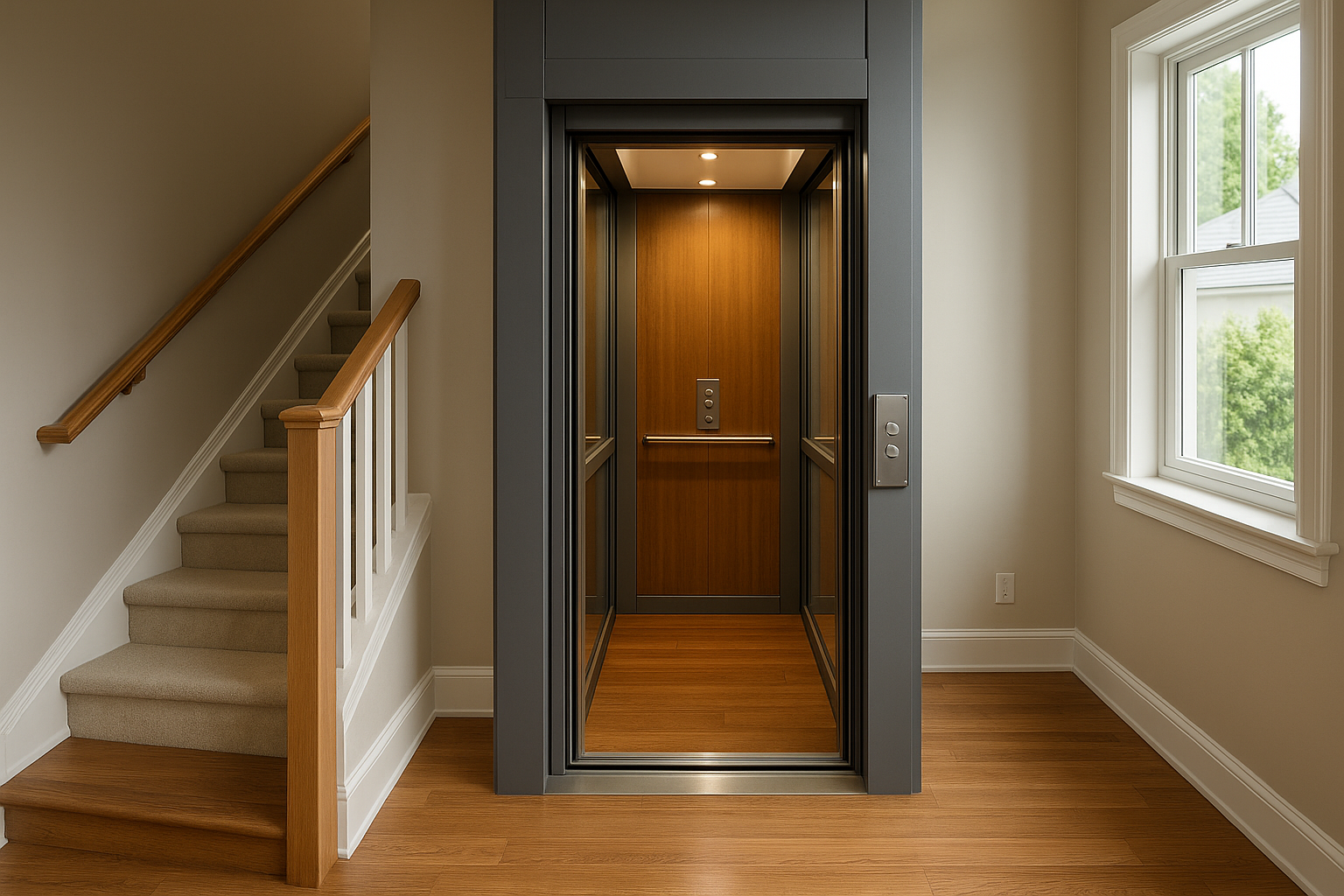
Once considered a luxury reserved for sprawling mansions or mystery-novel stairwells, residential elevators and lifts have become increasingly common in custom multi-level homes. They’re not just a comfort feature—they’re often an aging-in-place strategy, an accessibility solution, and a long-term property value booster.
But elevators aren’t right for everyone. They require space, planning, engineering, permitting, and an honest look at your lifestyle and long-term goals. This article will help you understand your options, your costs, your constraints, and the pitfalls to avoid so you can decide what’s right for your home—and your future.
What Exactly Is a Residential Elevator?
A residential elevator is a small elevator designed to carry people (and sometimes light cargo) between floors. They come in several types—hydraulic, traction, pneumatic, and shaftless—and vary in cost, footprint, ride experience, and maintenance needs.
A residential lift or chair lift, on the other hand, is usually meant for a single user and operates on a rail system along a staircase or as a vertical platform lift.
Both can support aging in place—but each serves very different needs.
The Benefits: Why Homeowners Choose Elevators
1. Comfort and Long-Term Accessibility
Carrying laundry, luggage, groceries, or toddlers up two flights of stairs gets old quickly. An elevator takes away daily strain and makes your home far more comfortable as you age.
Great for:
- Multi-level homes
- Households planning to age in place
- Anyone with mobility challenges
- Families who anticipate future care needs
2. Better Resale Value
Buyers increasingly look for homes that have thoughtful accessibility built-in. Even if they don’t personally need it today, they value the option—and they’re willing to pay for it.
3. Space-Efficient Design
Believe it or not, a properly planned elevator often consumes less space than a staircase serving the same floors.
4. Safety
Stairs are the number one location of home injuries. An elevator is a safer alternative when designed and installed correctly.
The Downsides: Why You May Not Want an Elevator
Elevators are amazing tools, but they’re not perfect for every home.
1. High Initial Cost
Depending on type, installation complexity, and finishes, most residential elevators cost $25,000–$60,000, but some range well above that.
2. Maintenance Costs
Annual maintenance often runs $500–$1,000. Hydraulic pumps, cables, and batteries must be inspected regularly.
3. Space Requirements
Even shaftless models require structural planning. Retrofitting is possible, but rarely elegant—and often expensive.
4. Installation Constraints
Not every property or structure can accommodate a lift without structural changes, rewiring, or special permitting.
5. Not Always the Best Aging-in-Place Solution
Some homeowners need simpler accessibility solutions, and a full elevator may be overkill when a stair chair lift or platform lift could suffice.
Types of Residential Elevators (and Who They’re Best For)
1. Hydraulic Elevators
The quietest and smoothest ride. Uses a piston system.
Pros:
- Very smooth, luxurious ride
- Can handle heavier loads
- Durable and long-lasting
Cons:
- Requires a small machine room
- More expensive
- More complex installation
Best For:
New construction, multi-story homes, long-term use.
2. Traction (Cable-Driven) Elevators
Uses a counterweight and pulley system.
Pros:
- No machine room (machine-room-less designs are common)
- Energy efficient
- Less floor space required
Cons:
- More noise than hydraulic
- Complex retrofitting
- More up-front structural planning
Best For:
Homes with multiple floors but limited room for a machine space.
3. Pneumatic (Vacuum Tube) Elevators
The “see-through pod” style often seen in modern homes.
Pros:
- Smallest footprint
- Very fast installation
- Minimal construction changes
Cons:
- Lower weight capacity
- Noisy
- Futuristic look not for everyone
Best For:
Small homes, retrofits, and those wanting quick installation.
4. Shaftless Elevators
These travel between floors with no traditional shaft.
Pros:
- Very small footprint
- Lower cost
- Good for retrofits
Cons:
- Two-floor maximum
- More basic aesthetics
Best For:
Two-story homes needing simple accessibility.
Alternatives: When Elevators Aren’t the Best Choice
1. Stair Chair Lifts
These attach to your stairs and carry one person at a time.
Pros:
- Affordable ($3,000–$10,000 installed)
- Fast installation
- Minimal structural impact
Cons:
- Not ideal for wheelchairs
- Bulkier appearance
- Doesn’t carry cargo
Good For:
Homeowners with limited budgets or single-story accessibility needs.
2. Vertical Platform Lifts (“Wheelchair Lifts”)
These lift a wheelchair and user vertically—great for short rises.
Pros:
- Works indoors or outdoors
- Great for wheelchair users
- Less expensive than full elevators
Cons:
- Limited height travel
- Requires more space than a stair lift
- Not as aesthetically pleasing indoors
Good For:
Garages, porches, and accessibility over short vertical distances.
Installation Considerations You Must Plan For
Elevators aren’t something to “figure out later.” They require coordinated planning with your designer, engineer, and contractor.
1. Structural Requirements
- You may need new beams, wall supports, or floor modifications.
- Elevator shafts must be fire-rated in some jurisdictions.
- Load-bearing walls cannot simply be “cut” without proper engineering.
2. Electrical Requirements
Elevators usually need:
- Dedicated 220V circuit
- Emergency lowering systems
- Backup battery or generator compatibility
- Telephone or communication device (required in many jurisdictions)
3. Space Requirements
Most elevators need a footprint of 25–40 sq ft depending on type.
You’ll also need overhead clearance and sometimes a pit.
4. Zoning & Permitting Regulations
Permit requirements vary by state and county, but expect:
- Elevator permits
- Electrical permits
- Mechanical permits
- Fire safety inspections (depending on the model)
- Structural engineering approval
Local zoning may dictate:
- Maximum building height
- Mechanical equipment placement
- Required setbacks (important for exterior lifts)
- Land size limitations (especially if adding an exterior hoistway)
Never assume your county allows all elevator types—always verify during design.
5. Accessibility Codes
If you ever plan to rent the home out or use it for multi-family purposes, additional ADA or state accessibility standards may apply.
Common Mistakes (and How to Avoid Them)
Mistake #1: Planning the Elevator After the House is Designed
Why not: Retrofitting adds thousands of dollars and often results in poorly placed or visually disruptive elevators.
Do instead: Integrate elevator planning during the earliest design stages.
Mistake #2: Choosing the Cheapest Model
Why not: Lower-priced models may be noisy, unreliable, or unable to carry what you need (like wheelchairs or groceries).
Do instead: Choose based on function and long-term needs—not sticker price.
Mistake #3: Underestimating Maintenance
Why not: Deferred maintenance can cause breakdowns, safety issues, or expensive repairs.
Do instead: Budget annually for maintenance and schedule it consistently.
Mistake #4: Ignoring Generator Compatibility
If your power goes out and your elevator stops mid-ride, it’s not only inconvenient—it can be unsafe.
Do instead: Have your electrician and elevator installer coordinate backup power systems.
Mistake #5: Choosing an Elevator That Doesn’t Fit Your Aesthetics
A futuristic pneumatic tube in a Craftsman home may feel… out of place.
Do instead: Select a model and finish that complements your home’s architecture.
Costs: What to Expect
Elevator Installation Costs
- Hydraulic: $35,000–$70,000+
- Traction: $30,000–$60,000
- Pneumatic: $30,000–$45,000
- Shaftless: $20,000–$35,000
Annual Maintenance
- $500–$1,000 depending on type
Retrofitting Surcharge
- Add $5,000–$15,000 depending on structural changes
Chair Lifts
- $3,000–$10,000 installed
Vertical Platform Lifts
- $10,000–$25,000 installed
Is an Elevator Right for Your Home?
Here’s how to decide:
Choose an Elevator If:
- You plan to age in place
- Your home has 2+ stories
- You want increased convenience
- You want to boost future resale value
- You have the budget for installation + maintenance
Choose a Lift or Chair Lift If:
- You mainly need mobility help on stairs
- You are on a tighter budget
- Your home can’t structurally support an elevator
- You prefer a simpler installation
Choose Neither If:
- Your home is single-story
- You don’t plan to stay long-term
- You rarely use upper floors
- You prefer to invest your budget elsewhere
Final Thoughts
Elevators and residential lifts can dramatically improve comfort, safety, and accessibility in a new multi-level home. But smart planning—early planning—is essential. Work with a qualified designer and builder who understands structure, code requirements, feasibility, and long-term aging needs.
If you’re considering an elevator or lift for your custom home, Dennis Fletcher Design Studio is here to help you plan, design, and make the best long-term decisions.
Ready to design a home that keeps you comfortable for decades to come?
Reach out to Dennis Fletcher Design Studio at info@dennisfletcherdesignstudio.com to start planning your accessible, future-ready home today.
Leave a Reply