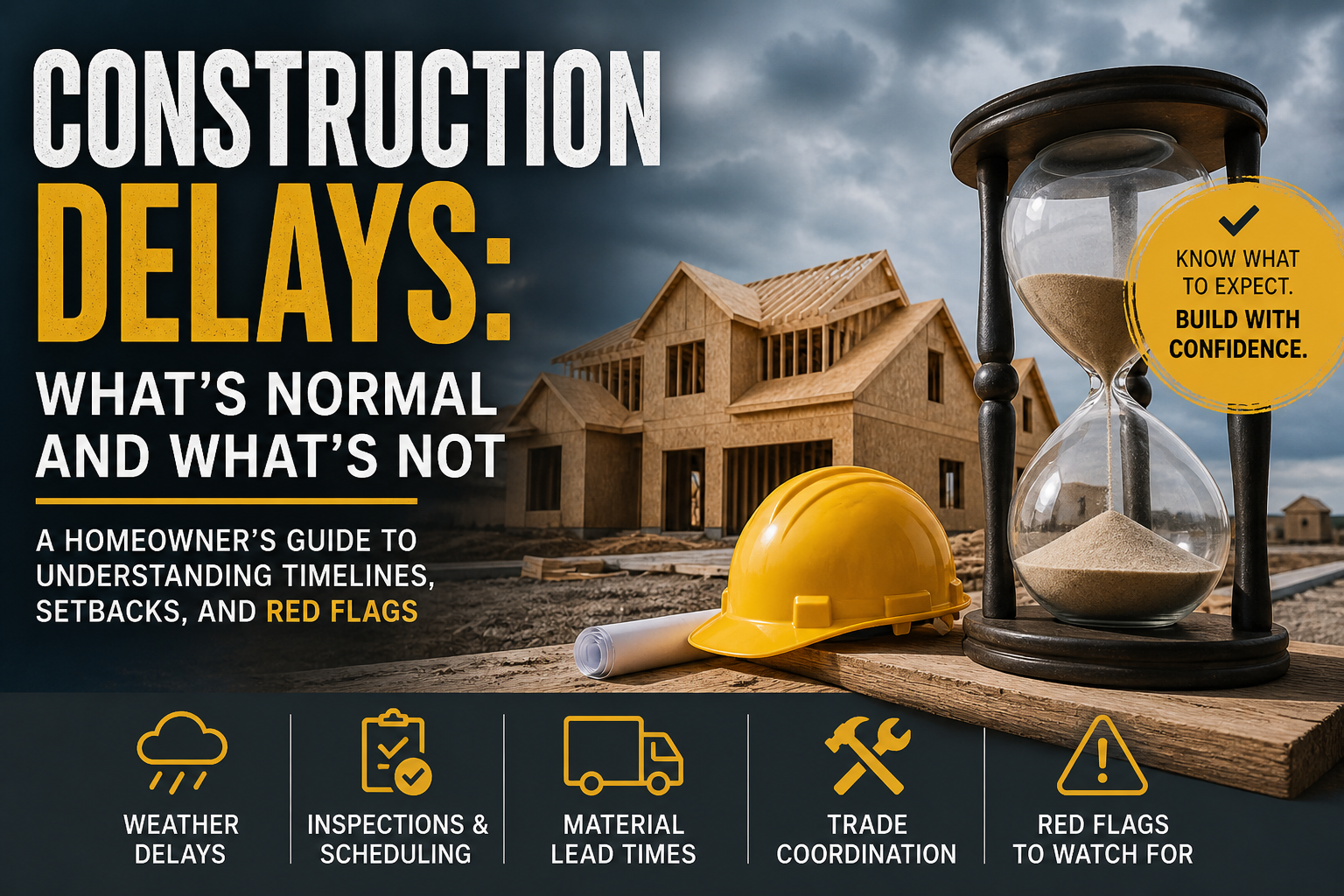
If you’re building a home, there’s one thing you’ll hear sooner or later:
“We’re running a little behind.”
For many homeowners, that phrase can feel unsettling. You start wondering:
- Is something wrong?
- Is my project in trouble?
- Should I be concerned?
The truth is, delays are a normal part of construction. But not all delays are created equal. Some are expected and manageable. Others are signs that something needs attention.
In this article, we’ll break it all down in plain language—so you know what’s normal, what’s not, and when it’s time to ask questions.
Why Delays Happen in the First Place
Before we talk about “good” vs. “bad” delays, it’s important to understand one key idea:
👉 A construction schedule is not a straight line—it’s a coordinated sequence of moving parts.
Every phase depends on:
- Weather
- Materials
- Labor availability
- Inspections
- Coordination between trades
If one piece shifts, everything behind it adjusts.
That’s not poor planning—it’s the nature of building a home.
Normal Construction Delays (What to Expect)
These are delays that happen on almost every project. They may slow things down slightly, but they’re usually handled without major issues.
1. Weather Delays
Weather is one of the biggest and most unavoidable factors.
Common examples:
- Heavy rain delaying excavation or foundation work
- Freezing temperatures affecting concrete pours
- High winds stopping framing or roofing
👉 Important: Many outdoor phases cannot proceed safely or correctly in bad weather.
What’s normal:
- A few days to a couple of weeks of weather-related delays over the course of a project
2. Inspection Scheduling
Every major phase of construction requires inspections:
- Footings
- Foundation
- Framing
- Rough plumbing, electrical, HVAC
- Insulation
- Final inspection
Sometimes:
- Inspectors are backed up
- Municipal schedules are limited
- Re-inspections are needed
What’s normal:
- Waiting a few days for inspections
- Occasional re-checks before moving forward
3. Material Lead Times
Not everything is sitting on a shelf ready to install.
Some items are ordered specifically for your home:
- Windows and doors
- Cabinets
- Appliances
- Specialty fixtures
- Custom materials
Delays can happen due to:
- Manufacturing timelines
- Shipping delays
- Backorders
What’s normal:
- Adjustments to the schedule based on delivery timing
4. Trade Coordination Gaps
Construction follows a very specific order:
- Framing
- Rough plumbing/electrical/HVAC
- Insulation
- Drywall
- Finishes
But subcontractors don’t just work on one house—they juggle multiple projects.
So sometimes:
- A crew finishes one job before starting yours
- A small gap appears between trades
What’s normal:
- A few days where “nothing seems to be happening”
👉 This is often just scheduling behind the scenes—not a problem.
5. Minor Plan Adjustments
Even with the best planning, small changes happen:
- Slight layout tweaks
- Adjusting for field conditions
- Fixing unforeseen issues
What’s normal:
- Small pauses to resolve details correctly
When Delays Become a Concern (Red Flags)
Now let’s talk about the other side.
These are situations where delays may signal larger problems.
1. Long Periods of No Activity
If the site sits idle for:
- Several weeks
- With no clear explanation
That’s worth asking about.
👉 A short pause is normal. A long, unexplained one is not.
2. Poor Communication
One of the biggest warning signs isn’t the delay itself—it’s how it’s communicated.
Be cautious if:
- You’re not getting updates
- Your questions go unanswered
- Explanations feel vague or inconsistent
A well-managed project should always include clear communication.
3. Repeated Mistakes or Rework
Occasional corrections are normal.
But if you’re seeing:
- Work being redone multiple times
- Frequent inspection failures
- Ongoing quality issues
This can indicate:
- Poor coordination
- Lack of supervision
- Inexperienced crews
4. Constant Schedule Changes Without Reason
Schedules do shift—but they should still feel intentional and organized.
Watch for:
- Deadlines constantly moving
- No clear timeline
- “We’ll see” answers instead of plans
5. Missing Materials That Should Have Been Ordered Earlier
Good builders plan ahead for long-lead items.
If major components are:
- Ordered late
- Frequently unavailable
- Holding up progress
That may point to planning issues, not just bad luck.
How to Tell the Difference
Here’s a simple way to evaluate any delay:
Ask yourself three questions:
1. Was this delay explained clearly?
- Yes → Likely normal
- No → Worth asking about
2. Does it make sense based on the phase of construction?
- Yes → Probably expected
- No → Look deeper
3. Is there a plan to move forward?
- Yes → You’re in good shape
- No → Time to get clarity
What You Should Do as a Homeowner
You don’t need to manage the project—but you should stay informed.
Stay Engaged (But Not Overbearing)
- Visit the site when appropriate
- Ask questions
- Stay involved in decisions
Communicate Early
If something feels off:
- Ask for clarification
- Request updates
- Keep communication respectful and direct
Understand the Bigger Picture
A few delays here and there do not mean failure.
👉 A well-built home is always more important than a rushed schedule.
Avoid Causing Delays Yourself
Some of the biggest slowdowns come from homeowners:
- Changing decisions too late
- Not making selections on time
- Requesting major changes mid-build
Your responsiveness plays a bigger role than most people realize.
The Reality of Construction Timelines
Here’s the honest truth:
There is no such thing as a perfectly on-time construction project.
The goal isn’t perfection—it’s:
- Good planning
- Clear communication
- Smart problem-solving
If those are in place, delays become manageable bumps, not major issues.
Final Thoughts
Construction delays can feel stressful—but they don’t have to be confusing.
When you understand:
- What’s normal
- What’s not
- And how to respond
…you gain confidence in the process.
And that confidence makes the entire experience far more enjoyable.
If you’re planning to build a custom home and want guidance through every phase of the process, we’re here to help.
Let’s make your home-building experience clear, informed, and enjoyable from start to finish.
Leave a Reply