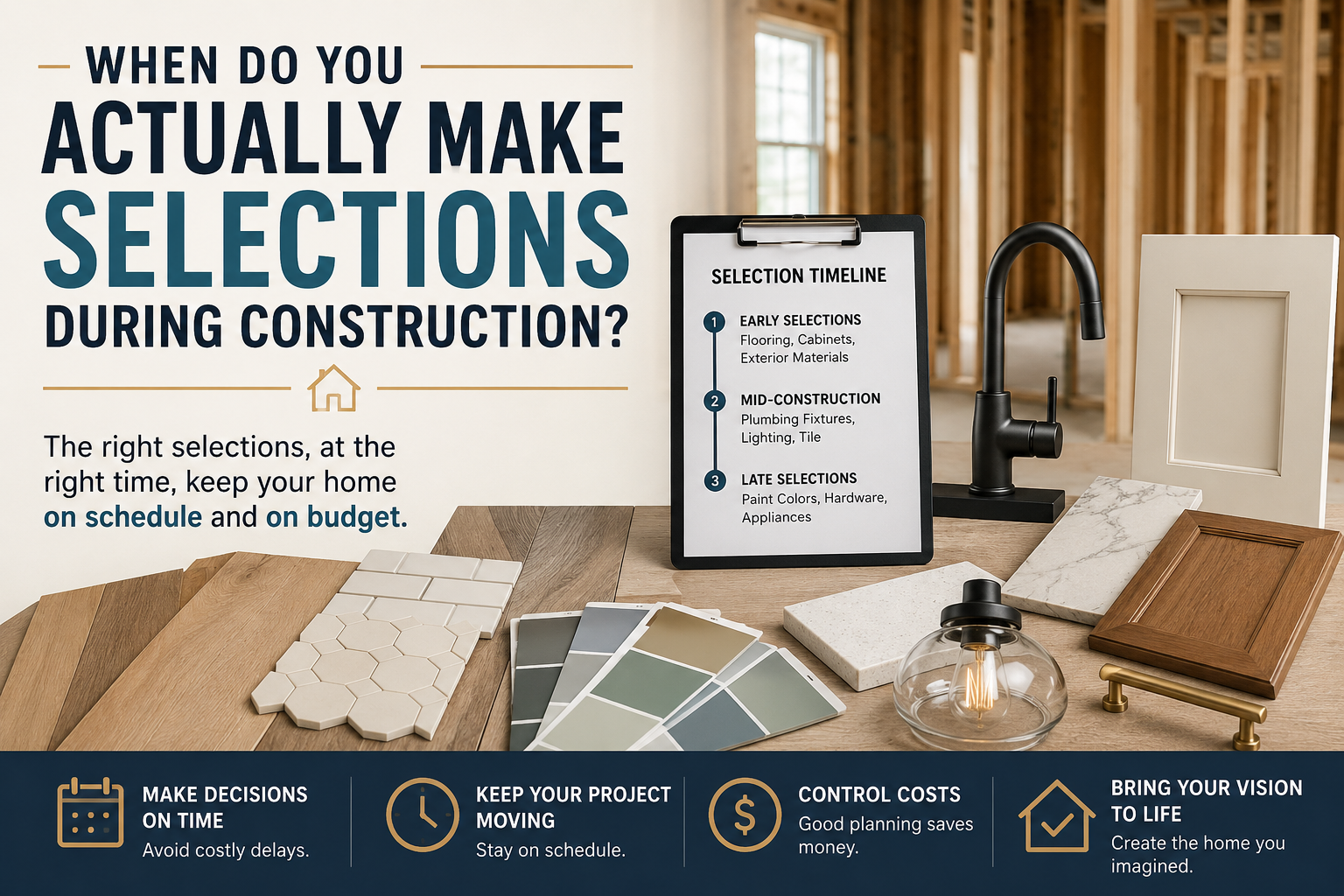
Understanding When Flooring, Cabinets, Fixtures, and Finishes Need to Be Chosen
Building a custom home is exciting for many reasons, but one of the most enjoyable parts of the process is selecting the finishes and features that make the house feel like your home. Flooring, cabinets, countertops, lighting fixtures, paint colors, plumbing fixtures, tile patterns, hardware, and appliances all play a major role in the final appearance and functionality of the home.
What many homeowners do not realize, however, is that these selections are not made whenever inspiration strikes. Every decision ties directly into the construction schedule. Certain selections must be finalized long before they are actually installed. Delays in making decisions can create scheduling problems, material ordering issues, labor conflicts, and even construction stoppages.
One of the biggest causes of frustration during residential construction is when homeowners are surprised by how early selections are required. A homeowner may assume they have months to decide on flooring or lighting, only to discover that those decisions needed to be finalized weeks earlier so materials could be ordered and subcontractors could stay on schedule.
Understanding when selections happen during construction helps homeowners stay organized, avoid delays, reduce stress, and make better decisions throughout the building process.
Why Selections Matter More Than Most Homeowners Realize
Selections are not simply decorative choices. They affect:
- Construction scheduling
- Material lead times
- Trade coordination
- Budget management
- Permit compliance
- Installation sequencing
- Product compatibility
- Long-term maintenance
For example, selecting a freestanding tub may require different plumbing locations than originally planned. Choosing oversized tile may affect floor preparation requirements. Picking custom cabinetry may extend the schedule due to manufacturing lead times.
Even seemingly small changes can affect multiple trades.
A change in lighting layout may impact:
- Electrical rough-ins
- Framing adjustments
- Ceiling design
- HVAC duct routing
- Insulation placement
- Drywall installation
This is why builders and designers encourage homeowners to make decisions earlier than expected.
The earlier selections are finalized, the smoother the construction process usually becomes.
The Three Main Phases of Construction Selections
Most residential selections happen during one of three general phases:
1. Pre-Construction Selections
These are decisions that must happen before construction begins or very early in the process.
Examples include:
- Exterior materials
- Windows
- Roofing
- Cabinet layouts
- Structural options
- Appliance specifications
- Plumbing fixture locations
- HVAC options
- Electrical planning
These selections directly affect plans, permits, engineering, and ordering.
2. Rough-In Phase Selections
These decisions happen before walls are closed up.
Examples include:
- Lighting fixtures
- Electrical device locations
- Plumbing fixtures
- Shower systems
- Low-voltage wiring
- Security systems
- Smart home equipment
- Ceiling fan locations
These choices impact the rough mechanical installations.
3. Finish Phase Selections
These are the visible decorative finishes installed near the end of construction.
Examples include:
- Flooring
- Tile
- Paint colors
- Countertops
- Cabinet finishes
- Interior hardware
- Mirrors
- Accessories
- Decorative lighting
Although these are installed later, many still need to be selected much earlier because of manufacturing and shipping timelines.
When Major Selections Usually Happen
Every builder operates differently, but most custom homes follow a fairly similar timeline.
Below is a general overview of when homeowners are usually expected to make major decisions.
Lot Purchase & Design Phase
This phase often happens months before construction begins.
Selections Commonly Made During This Stage
Exterior Style
This includes:
- Siding materials
- Brick or stone choices
- Roof style
- Window style
- Exterior trim details
- Porch design
These decisions help define the architectural character of the home.
Structural Options
Homeowners typically finalize:
- Room sizes
- Ceiling heights
- Garage configurations
- Basement layouts
- Structural beams
- Window locations
- Fireplace locations
Changing these later can become extremely expensive.
Appliance Planning
Appliances often need to be selected early because:
- Cabinet sizes depend on appliance dimensions
- Ventilation requirements vary
- Electrical needs differ
- Plumbing locations may change
For example, a 48-inch professional range requires different clearances and venting than a standard 30-inch range.
Cabinet Layouts
Cabinet planning usually happens surprisingly early.
Cabinet manufacturers need time to:
- Produce shop drawings
- Confirm dimensions
- Order materials
- Schedule manufacturing
- Coordinate installation
Custom cabinetry can sometimes require several months of lead time.
Foundation & Framing Phase
Once construction begins, attention turns toward selections that affect rough-ins and structural coordination.
Plumbing Fixture Selections
Many homeowners think plumbing fixtures are selected near the end of the project.
In reality, plumbing fixture decisions often happen during framing.
This includes:
- Tub styles
- Shower systems
- Faucet configurations
- Pot fillers
- Freestanding tubs
- Wall-mounted faucets
- Specialty sinks
Why so early?
Because plumbers need exact specifications to place:
- Drain locations
- Water lines
- Valve heights
- Wall blocking
- Floor penetrations
Changing these later can require opening finished walls or relocating plumbing.
Electrical Planning
During framing, homeowners usually finalize:
- Light fixture locations
- Recessed lighting layouts
- Switch locations
- Outlet locations
- USB outlets
- EV charging stations
- Exterior lighting
- Ceiling fans
- Smart home systems
The electrical rough-in occurs before insulation and drywall.
Once walls are closed, changes become far more difficult and expensive.
HVAC & Mechanical Decisions
Homeowners may also finalize:
- Thermostat locations
- Zoning systems
- Humidity controls
- Air purification systems
- Return air placements
- Floor vent styles
These systems must coordinate with framing, plumbing, and electrical work.
Before Drywall Installation
This is one of the most important decision-making stages.
Once drywall is installed, many hidden systems become inaccessible without demolition.
Low Voltage & Technology Selections
This may include:
- Internet wiring
- Speaker systems
- Security cameras
- Alarm systems
- Television locations
- Home office wiring
- Smart lighting systems
Even homeowners who do not plan to fully automate their home often choose to pre-wire for future upgrades.
Blocking & Specialty Features
Builders may ask about:
- Grab bars
- Floating shelves
- Heavy mirrors
- Wall-mounted televisions
- Future accessibility needs
Additional wall blocking is much easier to install before drywall.
Drywall & Interior Finish Phase
Once drywall is complete, the home begins transitioning into the finish stage.
This is often when homeowners start seeing rapid visual progress.
It is also when many finish selections begin arriving onsite.
Cabinet Installation Phase
Cabinets are usually installed before:
- Countertops
- Plumbing trim
- Final electrical fixtures
- Backsplash tile
By this point, cabinet selections should already be fully finalized.
Cabinet Decisions Typically Include
- Door style
- Wood species
- Paint or stain color
- Hardware style
- Crown molding details
- Interior accessories
- Soft-close features
- Drawer configurations
Cabinet lead times are one of the biggest scheduling concerns in residential construction.
A delayed cabinet order can impact:
- Countertop templating
- Plumbing fixture installation
- Appliance installation
- Flooring coordination
- Final inspections
Countertop Selections
Countertops are usually selected before cabinet installation but templated afterward.
Why?
Because countertops must be measured after cabinets are installed to ensure accuracy.
Countertop Decisions Often Include
- Material type
- Edge profile
- Thickness
- Backsplash details
- Sink cutouts
- Waterfall edges
- Veining direction
Popular materials may require extended fabrication schedules.
Natural stone selections can also involve slab viewing appointments.
Flooring Selections
Flooring selections are often finalized much earlier than homeowners expect.
This includes:
- Hardwood
- Luxury vinyl plank
- Tile
- Carpet
- Engineered flooring
- Specialty flooring
Why early?
Because flooring affects:
- Floor height transitions
- Cabinet installation heights
- Stair details
- Material ordering
- Acclimation periods
- Moisture management
Certain flooring materials may need weeks to acclimate to interior humidity conditions before installation.
Tile selections may also require layout approvals before installation begins.
Tile & Shower Selections
Tile work involves far more decisions than most homeowners anticipate.
Selections may include:
- Tile size
- Material type
- Grout color
- Layout patterns
- Accent bands
- Niches
- Trim profiles
- Shower pan details
Complex tile designs can require additional labor time and coordination.
Large-format tile installations may also require specialized floor preparation.
Interior Paint Selections
Paint colors are often selected later in the process, but not at the very end.
Builders usually need paint selections before:
- Trim finishing
- Cabinet touch-ups
- Flooring completion
- Final fixture installation
Many homeowners underestimate how lighting affects paint appearance.
Colors can look dramatically different depending on:
- Natural light exposure
- Ceiling height
- Bulb temperature
- Time of day
- Adjacent finishes
Testing sample colors onsite is usually a smart idea.
Lighting Fixture Selections
Decorative lighting often arrives late in the process, but selections usually need to happen much earlier.
This includes:
- Chandeliers
- Pendant lights
- Vanity lights
- Exterior lanterns
- Dining room fixtures
- Ceiling fans
Some decorative fixtures have surprisingly long lead times.
Custom or imported lighting can sometimes take several months to arrive.
Delays here can impact final electrical completion and inspections.
Plumbing Trim & Hardware
Near the final stages, homeowners usually confirm:
- Faucet finishes
- Shower trim
- Cabinet hardware
- Door hardware
- Towel bars
- Mirrors
- Accessories
Even small hardware selections can affect installation schedules.
For example:
- Cabinet pulls may require drilling templates
- Specialty door hardware may need custom mortising
- Wall-mounted faucets require exact alignment
Appliance Delivery Coordination
Appliance delivery timing is extremely important.
Delivering appliances too early creates storage risks.
Delivering them too late can delay:
- Final inspections
- Countertop completion
- Cabinet adjustments
- Occupancy approvals
Many builders coordinate appliance delivery within a narrow scheduling window.
Some appliances may also require onsite verification before cabinetry is finalized.
Why Late Selections Cause Construction Delays
One delayed selection can create a chain reaction throughout the project.
For example:
If flooring is not selected on time:
- Material cannot be ordered
- Flooring installers cannot be scheduled
- Cabinet heights may remain uncertain
- Trim carpentry may be delayed
- Appliance installation may shift
- Final inspections may move back
Construction scheduling works like a domino effect.
Each trade depends on the previous trade finishing on time.
When selections are delayed, subcontractors may move to other projects, making rescheduling even more difficult.
The Reality of Material Lead Times
One of the biggest changes in residential construction over the past several years has been increased material lead times.
Some products that once arrived in days may now take weeks or months.
Common long-lead items include:
- Custom windows
- Cabinets
- Specialty appliances
- Imported tile
- Custom doors
- Plumbing fixtures
- Lighting fixtures
- Specialty hardware
This is why builders often request selections much earlier than homeowners expect.
They are not trying to rush the process.
They are trying to protect the construction schedule.
Tips for Homeowners Managing Selections
Start Early
Do not wait until the builder asks for selections before researching options.
Start gathering inspiration early.
This gives you time to:
- Compare products
- Understand pricing
- Visit showrooms
- Order samples
- Evaluate quality
Make Decisions Promptly
Indecision is one of the biggest causes of construction delays.
It is completely normal to feel overwhelmed.
There are thousands of choices involved in building a home.
However, delaying decisions too long can create stress later.
Having a general design direction early helps simplify future choices.
Keep a Selection Binder or Digital Folder
Many homeowners benefit from organizing selections in one place.
This may include:
- Product links
- Finish schedules
- Paint colors
- Appliance specifications
- Warranty information
- Fixture photos
- Order confirmations
Organization reduces confusion and helps avoid mistakes.
Understand Your Budget
Selections can significantly affect the final project cost.
Upgrades add up quickly.
A small increase in price per square foot may become substantial across an entire house.
Understanding allowances and upgrade costs early helps prevent surprises.
Ask About Lead Times
Do not assume products are readily available.
Always ask:
- Is this in stock?
- How long is shipping?
- Are there delays?
- Are substitutes available?
- Does this affect scheduling?
Lead time awareness helps avoid disappointment later.
Trust the Process
Builders, designers, and suppliers coordinate hundreds of moving parts during construction.
When they request selections by certain dates, those deadlines usually exist for good reason.
Meeting selection deadlines helps:
- Protect the schedule
- Reduce stress
- Avoid rush decisions
- Prevent change orders
- Improve coordination
Final Thoughts
Selections are one of the most exciting parts of building a home, but they are also one of the most important responsibilities homeowners have during the construction process.
Every decision affects scheduling, coordination, budgeting, and installation.
The earlier homeowners understand when selections are required, the smoother the building process usually becomes.
Rather than feeling rushed or overwhelmed, informed homeowners can approach selections with confidence and preparation.
By staying organized, communicating clearly, and making decisions on time, homeowners help keep construction moving forward efficiently while creating a home that truly reflects their style, priorities, and lifestyle.
Construction Terms to Know
| Term | Definition |
| Allowance | A budgeted amount set aside for selections such as flooring, lighting, or fixtures before final products are chosen. |
| Lead Time | The amount of time required to manufacture, ship, and deliver a product after ordering. |
| Rough-In | The installation stage for plumbing, electrical, and HVAC systems before insulation and drywall. |
| Finish Schedule | A detailed list of all selected materials, finishes, fixtures, and colors used throughout the home. |
| Change Order | A formal modification to the construction contract involving changes to materials, scope, pricing, or scheduling. |
| Templating | The process of measuring installed cabinets or surfaces to create precise countertop fabrication dimensions. |
| Acclimation | The process of allowing flooring or materials to adjust to interior temperature and humidity conditions before installation. |
| Punch List | A list of remaining corrections or incomplete items identified near the end of construction. |
Ready to Start Planning Your Custom Home?
Dennis Fletcher Design Studio helps homeowners navigate every stage of the residential design and construction process with clarity, organization, and thoughtful planning.
If you are preparing to build a custom home, addition, or vacation property, we would love to help.

Leave a Reply