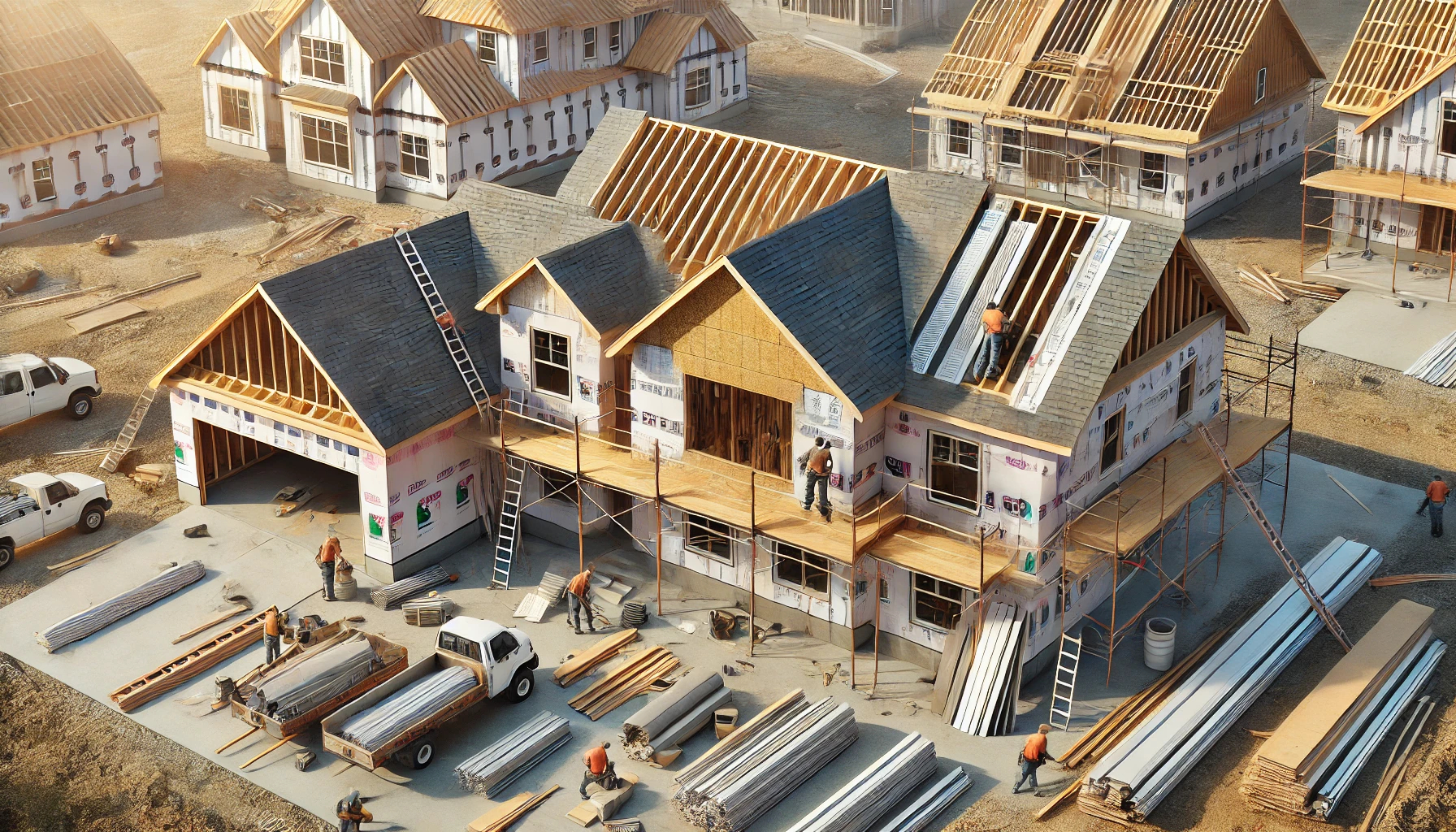
Building a new home is an exciting journey, and as you approach the stage of installing roofing and siding, it’s important to understand the steps involved, what to expect, and how to prepare. This guide will help you navigate the process smoothly, from ordering materials to final installation, and provide insights into what comes next.
Below I offer timelines as suggestions. Understand, these may differ considerably depending on where you are and what you are purchasing. All timelines are a guide only.
Ordering Roofing and Siding Materials
Timeline:

- 4-6 weeks before installation: Begin researching and selecting roofing and siding materials. Consider factors like durability, aesthetic appeal, and climate suitability.
- 3-4 weeks before installation: Place your order with your chosen supplier. Ensure you have accurate measurements and account for any additional materials needed for complex designs or custom features.
Preparation:
- Consult with your contractor: Discuss the types of materials that best suit your home’s design and your budget.
- Check local regulations: Ensure the materials comply with local building codes and regulations.
- Coordinate with suppliers: Confirm delivery dates and any special handling requirements. This helps avoid delays and ensures materials arrive in good condition.
Receiving Your Materials
When your roofing and siding materials arrive, inspect them thoroughly to ensure they match your order and are free from damage. Here are key steps to follow:
Inspection Checklist:
- Verify quantities: Check that you have received the correct amount of each material.
- Inspect for damage: Look for any signs of damage during shipping, such as dents, cracks, or water exposure.
- Review specifications: Ensure the materials match the specifications and quality you ordered.
Storage Tips:
- Store in a dry area: Keep materials in a dry, covered area to prevent damage from weather.
- Organize by type: Separate materials by type and label them clearly to facilitate easy access during installation.
Installation Process

Roofing Installation:
- Day 1-2: Preparation and Underlayment Installation
- Remove old roofing (if applicable): If this is a renovation, the old roofing material will be removed first.
- Install underlayment: A protective layer is installed to create a barrier against moisture.
- Day 3-5: Installing Roofing Material
- Install shingles, tiles, or metal panels: The primary roofing material is installed, starting from the bottom edge and working upwards.
- Install flashing: Flashing is placed around roof penetrations (like chimneys and vents) to prevent leaks.
- Day 6: Final Inspection and Clean-Up
- Inspect for defects: Check the entire roof for any missing or misaligned materials.
- Clean up: Remove debris and ensure the site is tidy.
Siding Installation:
- Day 1-2: Preparation
- Prepare walls: Ensure the exterior walls are clean and any old siding is removed.
- Install weather barrier: A weather-resistant barrier is applied to protect the house structure.
- Day 3-6: Installing Siding
- Start with corners: Install corner posts and starter strips.
- Install siding panels: Begin installing panels from the bottom, ensuring each piece is level and securely fastened.
- Install trim: Finish with trim pieces around windows, doors, and eaves.
- Day 7: Final Inspection and Clean-Up
- Inspect for alignment: Check that all siding panels are straight and securely attached.
- Clean up: Remove any remaining debris and clean the work area.
What to Expect During Installation
Disruptions:
- Expect some noise and activity around your home as crews work on installing roofing and siding.
- There may be temporary limitations on access to certain parts of your property.
Weather Delays:
- Installation schedules can be affected by weather conditions. Rain or extreme temperatures can delay the process.
Quality Checks:
- Your contractor will perform regular quality checks to ensure the installation meets industry standards and your expectations.
Next Steps After Roofing and Siding
With roofing and siding complete, your home’s exterior is protected and visually appealing. Here are the next steps in the construction process:
- HVAC, Plumbing, and Electrical Rough-Ins: These systems will be installed and routed through the interior walls and ceilings.
- Insulation Installation: Insulation is added to improve energy efficiency and comfort.
- Drywall Installation: Walls and ceilings are covered with drywall, creating the interior structure of your home.
- Interior Finishes: This includes painting, flooring, cabinetry, and other interior design elements.
- Exterior Finishing Touches: Install gutters, downspouts, and any additional exterior features like decks or patios.
By understanding the timeline and process for roofing and siding installation, you can better prepare and ensure a smooth transition to the next stages of your home construction. Keep in close communication with your contractor and stay proactive in inspecting materials and work quality to achieve the best results for your new home.


Leave a Reply