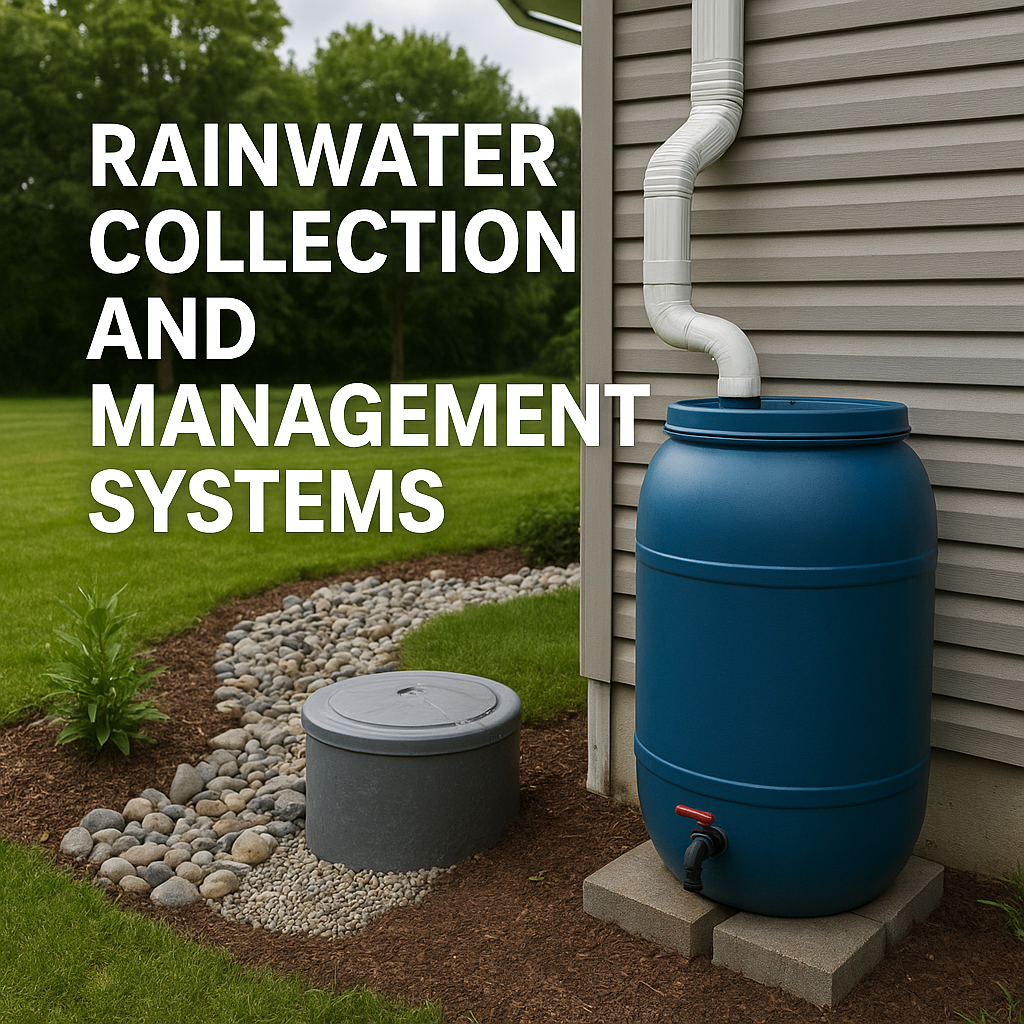
🌧 If you’ve ever watched water rush down your gutters during a storm and thought, “Wow, that’s a lot of wasted water”—you’re right. Millions of gallons of rainwater run off rooftops every year, often straight into storm drains, carrying pollutants to rivers and oceans. But with the right system, that water can stay on your property and serve a purpose.
Rainwater collection and management systems are becoming more popular as homeowners look for eco-friendly ways to save water, protect landscaping, and reduce strain on public utilities. Let’s dive into the three main options—rain barrels, cisterns, and drainage solutions—and then look at the legal side of things (yes, in some places, rain really does come with rules).
🛢 Rain Barrels: Small but Mighty
A rain barrel is the simplest and most affordable way to capture rainwater. Placed under a downspout, it collects water that runs off your roof.
How They Work:
- A downspout is directed into the barrel.
- The barrel has a spigot at the bottom so you can attach a hose or fill a watering can.
- Overflow valves prevent flooding when the barrel fills up.
Benefits:
- Affordable (often under $200).
- DIY-friendly—many local hardware stores even sell kits.
- Perfect for watering gardens, flower beds, and small lawns.
- Reduces stormwater runoff from your roof.
Drawbacks:
- Limited storage (40–80 gallons per barrel).
- Not pressurized—gravity alone moves the water.
- Must stay covered to prevent mosquito breeding.
Best For: Homeowners who want a quick, low-cost way to reduce water bills and keep their plants happy.
🏠 Cisterns: The Big Reservoir

Cisterns are essentially giant rain barrels—storage tanks that can hold hundreds or even thousands of gallons. They can be above-ground (looking like oversized barrels or tanks) or below-ground (buried out of sight).
How They Work:
- Rainwater from the roof flows through gutters into the cistern.
- Filters or first-flush diverters remove debris like leaves and grit.
- Water can be pumped out for irrigation, livestock, or even indoor non-potable uses like flushing toilets.
Benefits:
- Large capacity—great for bigger landscapes, farms, or properties off municipal water.
- Can support partial household water use (with proper treatment/filtration).
- Helps with drought resilience by storing water for dry periods.
- Underground options save yard space and keep temperatures stable.
Drawbacks:
- Higher cost and installation complexity (can range from $1,000 to $10,000+ depending on size and location).
- May require permits or inspections.
- Needs regular maintenance to keep water clean.
Best For: Homeowners in areas with long dry seasons, farms, or anyone interested in sustainable living on a larger scale.
🌱 Drainage Solutions: Guiding the Flow
Not every raindrop needs to be stored. Sometimes, the priority is moving water away from your home and yard in a safe, controlled way. Drainage solutions don’t give you extra water, but they do protect your property.
Options Include:
- French Drains – Gravel-filled trenches with perforated pipes that carry water away from problem areas.
- Dry Wells – Underground pits that collect and slowly disperse excess water back into the soil.
- Swales – Shallow, landscaped channels that guide water across your property while doubling as a natural-looking garden feature.
Benefits:
- Protects foundations from water damage.
- Prevents pooling, erosion, and flooding.
- Can be designed to look attractive in your landscaping.
Drawbacks:
- Doesn’t provide reusable water.
- May require professional installation.
Best For: Properties with poor natural drainage, homes in heavy rainfall regions, or lots with slopes where runoff causes erosion.
⚖️ Rainwater Collection Laws in the U.S.
Here’s where it gets tricky—rainwater collection isn’t treated the same everywhere. In most of the U.S., it’s perfectly legal and even encouraged, but some states regulate how much you can collect or how it’s used.
Examples:
- Colorado – Once famous for banning rainwater collection, it now allows homeowners up to two barrels totaling 110 gallons. The water must be used outdoors on the same property.
- Utah – Legal, but if you want to store more than 2,500 gallons, you need to register with the state. Anything smaller doesn’t require paperwork.
- Nevada – Restricts harvesting unless you have water rights, making it tricky for most residential users.
- Oregon – Legal only if collected from a rooftop or other artificial surface. Collecting directly from natural streams is prohibited.
- Texas & Arizona – Encourage rainwater harvesting, even offering tax incentives or rebates in some areas.
Key Takeaway: Always check state and local rules—even counties and homeowners associations may have guidelines for mosquito control, system design, or water quality.
🌍 Why It Matters
Collecting and managing rainwater isn’t just about saving money on your water bill. It helps reduce flooding, eases pressure on stormwater systems, supports sustainable landscaping, and keeps local waterways cleaner. In drought-prone areas, it can also be the difference between a green garden and a brown one.
For many homeowners, the best approach is a combination system: a rain barrel for gardening, a cistern for larger storage, and drainage solutions for excess flow. Together, these systems create a property that’s both environmentally friendly and well-protected.
If you’re ready to get started, or just have questions about how it works, I’d be happy to talk.
Leave a Reply