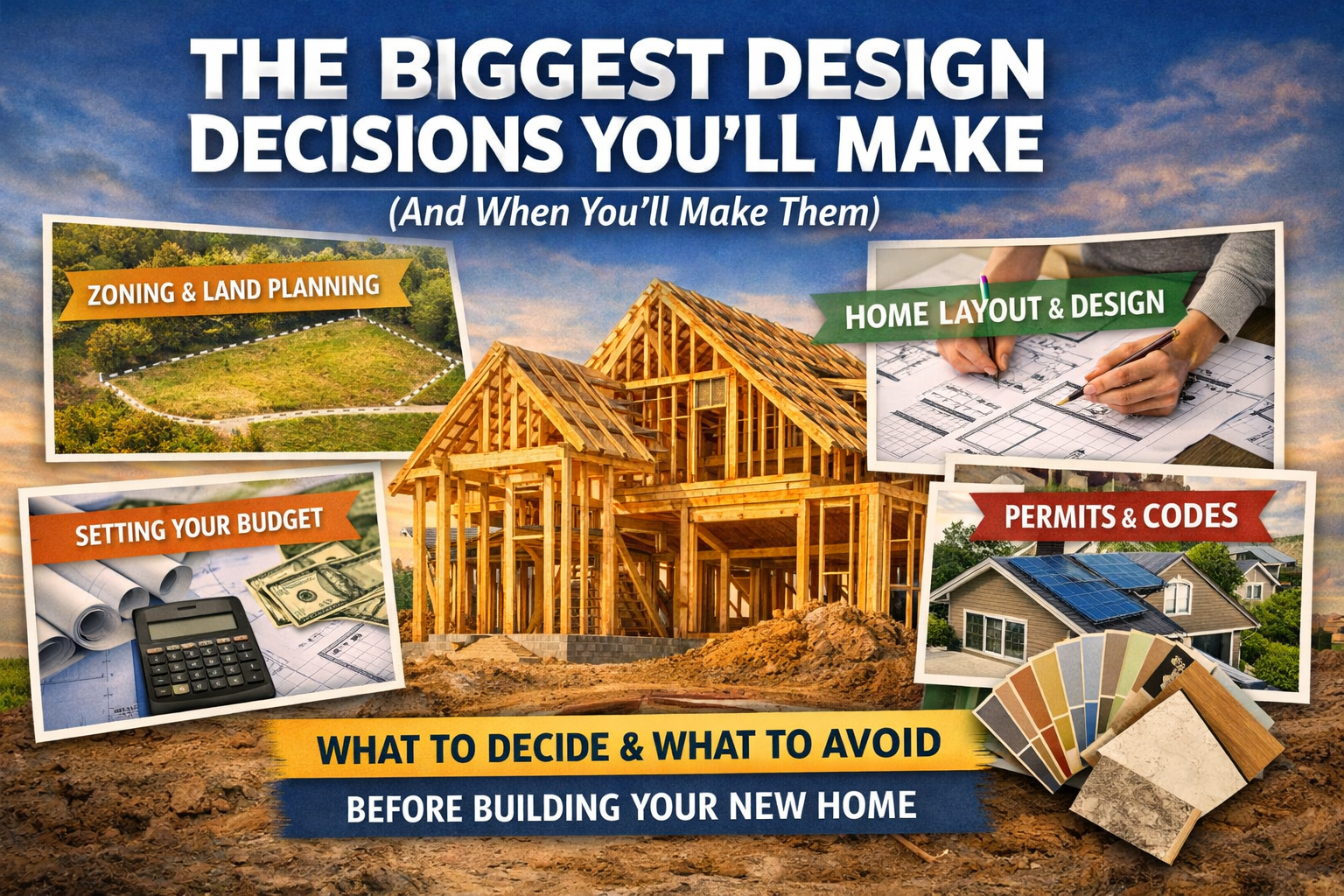
If you’re planning to build a new home in 2026, it’s easy to assume the biggest decisions are things like cabinet colors, countertops, or light fixtures. While those matter, they are not the decisions that will make or break your project.
The most important design decisions happen earlier, often before many homeowners realize they’re making them. These choices affect your budget, timeline, permit approvals, construction efficiency, and even whether your home can be built at all on your land.
This article continues the conversation started in “What a Home Designer Actually Does (And Why It Matters More Than You Think)” by walking you through the major design decisions, when they occur, and why making them in the wrong order can cost you thousands later.
Phase 1: Land & Feasibility Decisions
(Before Design Ever Begins)
1. Can Your Land Actually Support the Home You Want?
This is the most overlooked—and most expensive—mistake homeowners make.
Before floor plans, elevations, or Pinterest boards, the real question is:
What will the land allow you to build?
Key constraints include:
- Zoning regulations (minimum square footage, height limits, setbacks)
- Lot size and shape
- Easements and rights-of-way
- Environmental constraints (wetlands, flood zones, critical areas)
- Septic or well requirements (if not on public utilities)
🔴 What Not to Do:
Do not purchase land assuming “we’ll make it work.” Zoning boards do not bend because a plan is already drawn—or paid for.
🟢 Why This Matters:
A designer evaluates your land before design begins, helping you avoid:
- Plans that violate setbacks
- Homes too large for septic approval
- Roof heights that exceed zoning limits
- Driveways that fail sight-distance or slope requirements
2. Budget Reality vs. Wish List Fantasy
Your budget is not just a number—it’s a design boundary.
Early decisions include:
- Overall square footage
- Number of stories
- Structural complexity
- Foundation type
- Roof form and spans
🔴 What Not to Do:
Don’t design first and “price it later.” This almost always leads to redesigns, frustration, and wasted fees.
🟢 Why This Matters:
Experienced designers design to a budget, not beyond it—balancing layout, structure, and material efficiency long before bids go out.
Phase 2: Conceptual Design Decisions
(Early Design Phase)
3. Overall Home Size & Layout Strategy
This is where form follows function.
Key questions answered here:
- How many bedrooms do you truly need?
- Will this be a forever home?
- One story vs. two?
- Finished basement or slab?
- How will the home adapt to aging or changing family needs?
🔴 What Not to Do:
Avoid copying plans found online without adjusting them for:
- Your climate
- Your land
- Your local codes
- Your actual lifestyle
🟢 Why This Matters:
Every unnecessary corner, jog, or odd room shape adds cost—often without adding livability.
4. Orientation on the Lot
Where your home sits on the land affects:
- Natural light
- Energy efficiency
- Heating and cooling costs
- Driveway length
- Outdoor living spaces
🔴 What Not to Do:
Don’t orient your home solely for “curb appeal” without considering sun exposure or prevailing winds.
🟢 Why This Matters:
A well-oriented home can feel brighter, more comfortable, and cheaper to operate—without adding construction cost.
Phase 3: Structural & Systems Decisions
(Mid Design Phase)
5. Foundation Type
Your foundation is dictated by:
- Soil conditions
- Water table
- Topography
- Local code
- Budget
Options may include:
- Slab-on-grade
- Crawlspace
- Basement
- Walk-out basement
🔴 What Not to Do:
Don’t force a basement where soil or groundwater conditions make it risky or expensive.
🟢 Why This Matters:
Foundation changes after design are among the most expensive revisions possible.
6. Structural Complexity
This includes:
- Roof spans
- Vaulted ceilings
- Cantilevers
- Large window walls
🔴 What Not to Do:
Avoid designing dramatic structural features without understanding their cost and engineering implications.
🟢 Why This Matters:
A designer helps balance visual impact with structural efficiency—saving money without sacrificing quality.
Phase 4: Code, Permitting & Approval Decisions
(Late Design Phase)
7. Zoning & Permit Compliance
By this stage, drawings must satisfy:
- Local zoning ordinances
- Building codes
- Health department requirements
- Utility approvals
- HOA guidelines (if applicable)
🔴 What Not to Do:
Do not submit permit drawings that were never coordinated with local authorities.
🟢 Why This Matters:
Permitting delays can push construction back months—and sometimes require full redesigns.
8. Energy Code & Performance Choices
2026 homes face stricter energy requirements:
- Insulation values
- Air sealing
- Window performance
- Mechanical system efficiency
🔴 What Not to Do:
Don’t treat energy compliance as an afterthought.
🟢 Why This Matters:
Energy decisions affect comfort, long-term costs, and inspection approvals.
Phase 5: Finish-Level Decisions
(Construction Phase)
9. Interior & Exterior Finishes
These include:
- Siding materials
- Roofing
- Windows
- Flooring
- Cabinets
- Fixtures
🔴 What Not to Do:
Avoid making finish selections too early—or too late.
🟢 Why This Matters:
Designers help sequence decisions so finishes complement the architecture and stay within budget.
Why Timing Matters More Than the Decision Itself
Many homeowners make good decisions—just at the wrong time.
A home designer’s role is not just creating drawings—it’s:
- Guiding when decisions should be made
- Preventing premature commitments
- Avoiding costly rework
- Coordinating design with regulations, land, and budget
This is why design is a process, not a single step.
Final Thought: The Best Decisions Feel Boring at First
The most valuable design decisions often don’t feel exciting:
- Setbacks
- Septic layouts
- Structural spans
- Budget boundaries
But these are the decisions that quietly protect your investment, timeline, and sanity.
If you’re building, understanding when decisions happen is just as important as understanding what they are.
Thinking About Building in 2026?
If you’re planning a new home and want to avoid costly surprises later, this is the moment to slow down—just enough to do things in the right order.
Getting clarity early is one of the smartest financial decisions you can make in a custom home project.
Leave a Reply