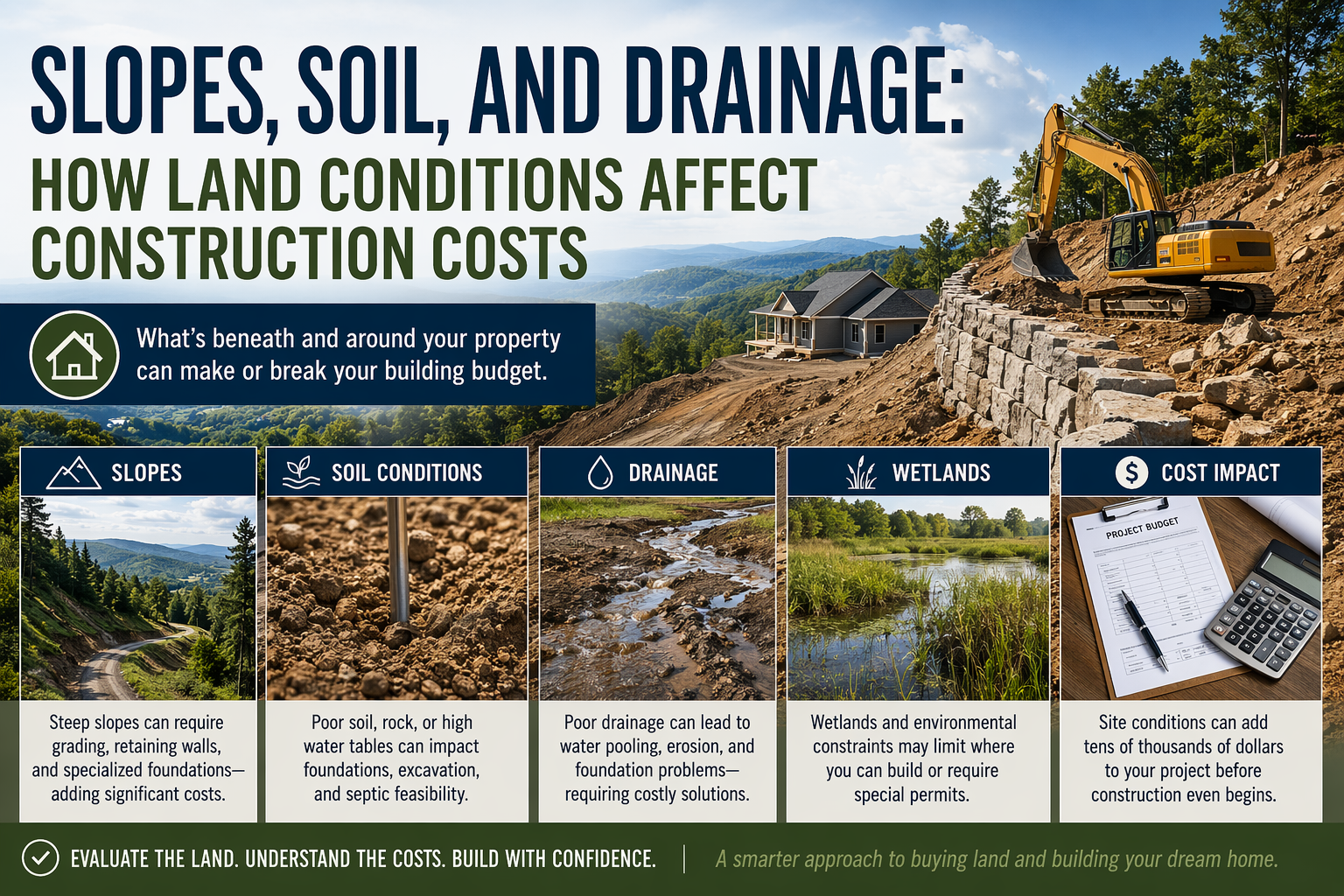
Why what’s beneath and around your property matters more than what you see
🏡 Introduction: The Land Isn’t Just the Land
When you first walk a piece of property, it’s easy to focus on what you can see:
- The views
- The trees
- The openness
- The overall feel
But what determines whether that land is easy or expensive to build on is often hidden:
- Below the surface
- In the slope of the terrain
- In how water moves across the site
And these factors don’t just influence design—they can dramatically affect your construction budget.
👉 In some cases, site conditions can add tens of thousands of dollars—or more—before construction even begins.
⛰️ Slopes: When Elevation Becomes Expensive
Sloped land can be beautiful. It offers:
- Scenic views
- Walkout basements
- Architectural opportunities
But it also introduces complexity.
📈 Mild Slopes
A gentle slope is often manageable and may even benefit drainage.
You may need:
- Minor grading
- Slight foundation adjustments
👉 Typically, these are cost-effective and desirable sites.
🧗 Steep Slopes
As slopes become more aggressive, costs rise quickly.
Challenges include:
- Difficult driveway access
- Increased excavation
- Specialized foundation design
- Equipment limitations
You may also need:
- Retaining walls
- Engineered footings
- Slope stabilization systems
👉 Steep sites can turn a standard build into a highly engineered project.
🌱 Soil Conditions: What’s Beneath the Surface
Not all soil is created equal—and it plays a critical role in construction.
🧱 Good Soil Conditions
Ideal soils are:
- Stable
- Well-draining
- Capable of supporting a foundation
These allow for:
- Standard footings
- Conventional construction methods
⚠️ Problematic Soil Types
🟤 Clay Soil
- Expands when wet, shrinks when dry
- Can cause foundation movement
🪨 Rock
- Difficult and expensive to excavate
- May require blasting or specialized equipment
🏖️ Sandy Soil
- Drains quickly but may lack stability
- Can require reinforcement
💧 High Water Table
- Groundwater sits close to the surface
- Can complicate foundations and basements
👉 These conditions often require engineering solutions, which increase costs.
🧪 Soil Testing: The Step You Should Never Skip
Before building, professionals often conduct tests such as:
- Perc (percolation) tests for septic systems
- Soil borings for structural analysis
These tests determine:
- Whether the soil can support a home
- What type of foundation is required
- Whether a septic system is feasible
👉 Skipping this step can lead to major surprises after purchase.
🌧️ Drainage: Where Water Goes (and Why It Matters)
Water is one of the biggest threats to a home if not managed properly.
🚨 Poor Drainage Can Cause:
- Foundation damage
- Wet basements or crawl spaces
- Erosion
- Mold and moisture issues
💦 Key Drainage Factors to Evaluate
🟢 Natural Water Flow
- Does water move away from the building area?
- Or does it collect in low spots?
🌊 Flood Zones
- Is the property in a FEMA-designated flood zone?
- Will flood insurance be required?
🌾 Low-Lying Areas
- These may appear attractive—but often retain water
🛠️ Drainage Solutions (and Costs)
If drainage is poor, solutions may include:
- Grading and reshaping the land
- Installing drainage systems (French drains, swales)
- Raising the home elevation
- Designing engineered stormwater systems
👉 These solutions can add significant upfront cost, but are essential for long-term performance.
🌿 Wetlands and Environmental Constraints
Some properties contain:
- Wetlands
- Protected environmental areas
- Buffers or conservation zones
These areas may:
- Restrict where you can build
- Require permits and environmental studies
- Limit usable land
👉 In some cases, they can eliminate buildable space entirely.
💰 How These Factors Impact Your Budget
Here’s where everything comes together.
Two properties may cost the same to purchase—but:
| Condition | Cost Impact |
| Flat, stable, well-drained land | Lower site prep costs |
| Moderate slope with decent soil | Moderate costs |
| Steep slope + poor soil + drainage issues | High to extreme costs |
Common added expenses include:
- Excavation and grading
- Retaining walls
- Soil stabilization
- Drainage systems
- Engineering and design adjustments
👉 These are often not included in base construction estimates, which is why they catch buyers off guard.
🧠 How This Affects Your Home Design
Site conditions don’t just affect cost—they influence design.
A designer may need to:
- Adjust the home’s footprint
- Change foundation types
- Elevate the structure
- Design around drainage patterns
- Incorporate retaining walls into the layout
👉 The land often dictates the design—not the other way around.
🔍 What to Look for Before You Buy
When evaluating land, ask:
- Is the property flat, sloped, or steep?
- Are there visible signs of water (standing water, soggy areas)?
- Has soil testing been done?
- Are there wetlands or environmental restrictions?
- Will significant grading be required?
👉 Better yet—have a professional evaluate the site before purchase.
💡 Why This Article Matters in the Bigger Picture
This topic ties directly into the larger land-buying process:
- Zoning and setbacks determine what you can build
- Utilities determine how the home functions
- Site conditions determine how much it will cost to build
All three must work together for a successful project.
🧭 Final Thoughts: The Hidden Cost Factor Most Buyers Miss
The biggest mistake first-time land buyers make isn’t choosing the wrong location.
It’s underestimating the land itself.
👉 A property that seems affordable upfront can quickly become expensive if:
- The slope is too steep
- The soil requires engineering
- Drainage solutions are needed
The smartest approach?
Evaluate the land like a builder—not just a buyer.
📣 Ready to Evaluate Your Land the Right Way?
If you’re considering purchasing land and want to understand how site conditions could impact your project, I can help you evaluate it before you commit.
Leave a Reply